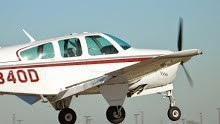
It was nice Texas early Fall day in 1992, just like today. The sun was shining, the sky was steel blue, temps around 80 deg F during the day, 50 to 60 at night (that's about 25C daytime, and 15C night, for you Celsius users).
I had got my private license the previous year, with about 75 hours PIC, and a wife-to-be. I think those two things came together as a package, because once I had a strong, settled relationship, I could find the time and interest to finish up my private license. We thought it would be fun to fly down to San Antonio and visit some friends there, and do it in my flying school’s Cessna 152, call sign Five Kilo Alpha.
My original intent was to pick up the plane after work on Friday, and return Sunday morning (autumn Sunday afternoons in Texas are dedicated to football). We got to Addison airport (KADS) around 5 pm, expecting to take off shortly thereafter, and to land at San Antonio International (KSAN) around nightfall. Astute readers will note from the tense, that things did not go as planned.
The school had lost my reservation. There was no blue and white Cessna 152 sitting waiting for us, tanks full, keys on the rack. After some discussion, they said there was one just coming out of annual in the hangar, 38 Hotel. I could have that one, although it was new to me. An hour or so later, it appeared on the ramp, signature still wet in the log book. I started pre-flight. Step #1 - turn on the master, and check the fuel level indication. Ooops! no fuel. Call the office, await truck. I completed the rest of the pre-flight, and climbed the struts for a visual check of the fuel level after filling - ooops #2 - no fuel caps!!! A hurried search of the hangar reveled two caps, which clicked into place with a reassuring "snap!"
7pm, and we had engine start. I taxied out to runway 16, received take off clearance, and climbed on runway heading. A call to DFW approach, and I had clearance through the Dallas Class B airspace, South over Love Field, and past the skyscrapers downtown, as the lights started to come on. I should mention here that as I rotated, one of the radios started to slide out of the rack, and my fiancée, sitting in the right hand seat, pushed it back in. She told me later. Fortunately, she is a good sport when it comes to flying. She isn’t interested in the mechanics of learning to fly, but she would like me to teach her enough to land if I was incapacitated.
Level at 5,000 and 20 miles south of DFW on a heading of 190, I noticed that the radio reception with DFW departure was weak, but it was (just) good enough to communicate. We continued to San Antonio, skirting the restricted airspace around Fort Hood. Approaching the class C airspace around San Antonio, now fully dark and near 10 pm - I couldn't raise San Antonio approach, unless I circled as close as I could get, under the outer shelf of their class C ring, and called when facing AWAY from the field. Finally I made contact, got clearance, and made a rapid final approach (120 kts on final) with a Southwest Airlines Boeing 737 close behind. Fortunately, having started to fly at Love Field, and finishing at Addison with a lot of business jet traffic, I was fairly used to that!
We had a good time in San Antonio, dining on the River Walk and drinking margaritas and Corona beer outside the Alamo. Sunday morning dawned wet and drizzly. The sky was 700 to 800 overcast, with light rain, the cloud tops reaching to 3,000 feet, and extending to 30 miles North of KSAN, beyond which CAVU reigned supreme all the way to Dallas. Having only a fresh PPL, I was grounded. We waited in the FBO lounge, and watched the NFL on the FBO’s TV. And waited. And waited.
Around 3pm, the ATIS finally stated that the ceiling was 1100 feet and 5 miles visibility. VFR! We loaded up the Cessna, and took off, along with 3 or 4 other VFR airplanes that had also been waiting. 800 feet AGL, and we were at the cloud bases again. Not familiar with the area, and not having GPS (no-one did in 1992), I headed North(ish). Trying to keep 500 feet below the clouds put me uncomfortably close to the ground, climbing put me too close to the cloud base, and seeing radio towers ahead on the sectional, I decided this was not safe and started to do a 180 turn to the left.
I made a radio call to approach to let them know, but I couldn't get a response with the poor radios in 38H. I glanced at the AI - 60 degrees of bank, and a lot of descent - a real world, honest to goodness unusual attitude in IMC! I leveled off in some random direction, very unhappy now, somewhat scared. I was a disoriented, low time VFR pilot in IMC conditions, without a working radio, in class C airspace, near a large airport. I knew this was often how accident reports began - or ended.
Finally I raised approach, and got vectors back to the airport. A wiser pilot. An unhappy pilot. A pleased-to-be-on-final-approach pilot. An alive pilot on the ground. We called our friends, stayed an extra night, and flew home on Southwest the next day.
A week later I flew on my own using Southwest Airlines down to San Antonio, picked up 38H, and flew it back to Addison in the normal severe-clear Texas Autumn skies. Unable to raise DFW approach, I flew around the Class B, under the Eastern-most shelf over White Rock Lake, and landed at Addison. A few days later, I was on the ground in my normal 152, and I saw 38H on approach, with the pilot complaining that he couldn’t hear the tower, and the tower complaining that 38H wasn’t responding to his calls. I had told the school about the radio issues, and previously I hadn’t seen bad maintenance from them. The school went out of business soon afterwards – maybe the rot was just setting in.
Lessons learned?
I had got my private license the previous year, with about 75 hours PIC, and a wife-to-be. I think those two things came together as a package, because once I had a strong, settled relationship, I could find the time and interest to finish up my private license. We thought it would be fun to fly down to San Antonio and visit some friends there, and do it in my flying school’s Cessna 152, call sign Five Kilo Alpha.
My original intent was to pick up the plane after work on Friday, and return Sunday morning (autumn Sunday afternoons in Texas are dedicated to football). We got to Addison airport (KADS) around 5 pm, expecting to take off shortly thereafter, and to land at San Antonio International (KSAN) around nightfall. Astute readers will note from the tense, that things did not go as planned.
The school had lost my reservation. There was no blue and white Cessna 152 sitting waiting for us, tanks full, keys on the rack. After some discussion, they said there was one just coming out of annual in the hangar, 38 Hotel. I could have that one, although it was new to me. An hour or so later, it appeared on the ramp, signature still wet in the log book. I started pre-flight. Step #1 - turn on the master, and check the fuel level indication. Ooops! no fuel. Call the office, await truck. I completed the rest of the pre-flight, and climbed the struts for a visual check of the fuel level after filling - ooops #2 - no fuel caps!!! A hurried search of the hangar reveled two caps, which clicked into place with a reassuring "snap!"
7pm, and we had engine start. I taxied out to runway 16, received take off clearance, and climbed on runway heading. A call to DFW approach, and I had clearance through the Dallas Class B airspace, South over Love Field, and past the skyscrapers downtown, as the lights started to come on. I should mention here that as I rotated, one of the radios started to slide out of the rack, and my fiancée, sitting in the right hand seat, pushed it back in. She told me later. Fortunately, she is a good sport when it comes to flying. She isn’t interested in the mechanics of learning to fly, but she would like me to teach her enough to land if I was incapacitated.
Level at 5,000 and 20 miles south of DFW on a heading of 190, I noticed that the radio reception with DFW departure was weak, but it was (just) good enough to communicate. We continued to San Antonio, skirting the restricted airspace around Fort Hood. Approaching the class C airspace around San Antonio, now fully dark and near 10 pm - I couldn't raise San Antonio approach, unless I circled as close as I could get, under the outer shelf of their class C ring, and called when facing AWAY from the field. Finally I made contact, got clearance, and made a rapid final approach (120 kts on final) with a Southwest Airlines Boeing 737 close behind. Fortunately, having started to fly at Love Field, and finishing at Addison with a lot of business jet traffic, I was fairly used to that!
We had a good time in San Antonio, dining on the River Walk and drinking margaritas and Corona beer outside the Alamo. Sunday morning dawned wet and drizzly. The sky was 700 to 800 overcast, with light rain, the cloud tops reaching to 3,000 feet, and extending to 30 miles North of KSAN, beyond which CAVU reigned supreme all the way to Dallas. Having only a fresh PPL, I was grounded. We waited in the FBO lounge, and watched the NFL on the FBO’s TV. And waited. And waited.
Around 3pm, the ATIS finally stated that the ceiling was 1100 feet and 5 miles visibility. VFR! We loaded up the Cessna, and took off, along with 3 or 4 other VFR airplanes that had also been waiting. 800 feet AGL, and we were at the cloud bases again. Not familiar with the area, and not having GPS (no-one did in 1992), I headed North(ish). Trying to keep 500 feet below the clouds put me uncomfortably close to the ground, climbing put me too close to the cloud base, and seeing radio towers ahead on the sectional, I decided this was not safe and started to do a 180 turn to the left.
I made a radio call to approach to let them know, but I couldn't get a response with the poor radios in 38H. I glanced at the AI - 60 degrees of bank, and a lot of descent - a real world, honest to goodness unusual attitude in IMC! I leveled off in some random direction, very unhappy now, somewhat scared. I was a disoriented, low time VFR pilot in IMC conditions, without a working radio, in class C airspace, near a large airport. I knew this was often how accident reports began - or ended.
Finally I raised approach, and got vectors back to the airport. A wiser pilot. An unhappy pilot. A pleased-to-be-on-final-approach pilot. An alive pilot on the ground. We called our friends, stayed an extra night, and flew home on Southwest the next day.
A week later I flew on my own using Southwest Airlines down to San Antonio, picked up 38H, and flew it back to Addison in the normal severe-clear Texas Autumn skies. Unable to raise DFW approach, I flew around the Class B, under the Eastern-most shelf over White Rock Lake, and landed at Addison. A few days later, I was on the ground in my normal 152, and I saw 38H on approach, with the pilot complaining that he couldn’t hear the tower, and the tower complaining that 38H wasn’t responding to his calls. I had told the school about the radio issues, and previously I hadn’t seen bad maintenance from them. The school went out of business soon afterwards – maybe the rot was just setting in.
Lessons learned?
1) Get there-itus caused me to continue the flight with a sub-standard airplane at night, and again on the way back in conditions I wasn't ready for. The fact that it was only 15 minutes to clear skies influenced my decision. I didn’t think about the fact that 15 minutes is enough time to die.
2) My training was good (I got out of an incipient spiral dive essentially on instruments. But my judgment was not. I learned to stay well inside the envelope!
3) I had never had to face a maintenance issue with an airplane I was flying before. The school’s aircraft were generally well maintained, and I had never seen anything worse than a low tire or fuel. The next time I didn’t like something, I would (and did) abandon the trip.
4) ATIS or AWOS may not tell the truth, the whole truth, and nothing but the truth. Presumably it happened to measure the ceiling as a higher patch went over the field.
5) Get Instrument Rated!!!!!!!! I stopped flying for several years due to work, young children and other things, and started again in 2006 when I bought my Beechcraft Sundowner, which used to be an instrument trainer and has 1 of everything, and 2 of some things.