Friday, April 5, 2013

A Tale of Two Airports

It was the best of times, it was the worst of times - that's how Charles Dickens started his story about the French Revolution, through the eyes of his protagonists living at different ends of the social spectrum, and in two very different cities and societies.  Viewed through the lens of aviation, the city of McKinney is itself two very different places......

On the East side of McKinney, Texas, is Collin County Regional Airport.  If you follow the airport signs from US-75 (Central Expressway) East along Eldorado, you will arrive at the base of the new control tower, opened in 2012.  The airport is owned by the city, and operated by the Collin County Airport Development Corporation (CCADC), which "is tasked with promoting, developing, encouraging and maintaining aeronautical facilities, commerce and development at Collin County Regional Airport". The City council appoints seven board members.

Although the Automated Weather Observation System (AWOS) which broadcasts on 119.925 MHz always announces "Collin County Regional Airport" before giving the most recent weather measurements to pilots (you can hear it on your phone by dialing (972) 548-8525), the aviation world simply calls it "McKinney", or knows it by its International Civil Aviation Organization code "KTKI".  All US airports with an ICAO code start with the letter "K", Dallas-Fort-Worth's code is KDFW.

McKinney Tower manages all aircaft traffic within 4 nautical miles of the tower, and up to 2,500 above ground level (AGL), which at KTKI is 588.9 feet above sea level, according to the FAA.  So the KTKI airspace is a cylinder, centered on the airport and 8 nautical miles in diameter, and up to 3,100 ft MSL (above mean-sea-level).  From 4,000 MSL to 11,000 feet MSL, the airspace above McKinney belongs to DFW Regional Approach, leaving a small sliver from 3,100 to 4,000 open to all comers.  But in practice pilots commonly talk to the tower anywhere from about 8 to 10 miles away, and certainly while overflying unless talking to DFW Approach

McKinney airport recently opened a new, wider, and stronger runway, called runway 18-36, which refers to the compass heading of the runway, depending on which way an airplane is facing.  Taking off or landing to the North, the compass will read "360", and to the South, "180".  Drop the trailing "0"s and you get the runway designation.  All airports around the world use that method.  Taxiways Alpha and Bravo run parallel to the runway (Bravo used to be the old runway), under the control of the "McKinney Ground" controller, leading to the North and South Hangars, and the FBO, which stands for "Fixed Base Operator".

Bigger airports usually have an FBO, and some airports like Dallas' Love Field have several.  The FBO is like an airport terminal for private airplanes, and combines the functions of security, check in, parking (for aircraft and cars), car rental, and gas station (for airplanes).  The lone FBO at McKinney is Cutter, part of a chain of FBOs in mostly in the southwest.  The Cutter offices also house a flight school and pilot shop, run by Monarch Aviation, and manages hangar space for the airport.  The two largest hangars by the FBO are used by maintenance shops, Air-O Specialists of Texas, which does most regular maintenance work on large and small aircraft, and Select Avionics, which sells and maintains the aircraft electronics (known as "avionics")

McKinney airport is a busy, corporate place.  It caters mostly to private business aircraft, which generate the most income, but the majority of the actual traffic is single engine propeller aircraft. At any given time, about half the aircraft in the pattern are doing some form of training, American Flyers and Monarch, based at Addison like to use Mckinney airport for repeated take off and landing practice (known as "touch-and-goes") since it's banned at even busier Addison.  The other half are either visiting aircraft, or aircraft based on the field.  There are a couple of flying clubs, the biggest being the North Texas Flying Club, which started out as the Texas Instruments flying club, but opened its membership to all in the 1990s.  For about $400/mo, aircraft owners can lease a private single airplane "T" hangar, or they can share a larger one with other airplanes, for less money.  Private Jets need their own hangars, some company flight departments might have an even larger hangar if they have multiple airplanes.

The Collin County Regional Airport Board has ambitions about eventually bringing scheduled commercial airliner flights into KTKI.  The new runway meets the international standards for passenger aircraft up to 450,000 lbs, good enough for regional jets and some small airliners, for all current business aircraft (except for a very few privately owned 747 and A380 aircraft, mostly in the middle east, and for Air Force One.)

If Collin County Regional Airport if the business face of Mckinney Aviation, AeroCountry is the smudgy-faced hobbyist country cousin.  Located 8 miles West of KTKI, between US-380 and Virginia Parkway just West of Custer Road, AeroCountry is a small, privately owned airport - but it's not all low rent.  The West side of the runway is a mixture of "T" hangars and shared hangars, together with about half a dozen houses with attached hangars for those pilots who can't bear to leave their flyable babies alone, even for a night.  The East side is all new development, with large shared hangars, and combination condominiums with attached hangars and a swimming pool.

There's only one jet on the field, an ex-Romanian Air Force trainer, parked at the south end.  There are many old and new biplanes, some homebuilt, and eclectic mix of everything else - twins, singles, open cockpit, closed cockpit, pushers, world war 2 trainers.  Some of these are transient, since there are several small maintenance shops on the field, but there is no FBO.  Pilot's can pump their own fuel from a tank near the south end, for about $1/gallon less than McKinney airport, but that's it.  There is no pampering at AeroCounty.

AeroCountry has an FAA designator, T31, but no ICAO designation.  Despite some publications (and GPS Navigation units) calling it "KT31", that's wrong.  It's just T31.  It has a single runway, 17-35, at 792 feet MSL.  Unlike McKinney, AeroCountry has no bad weather instrument approaches - if weather conditions are less than Visual Flight Rules (VFR), the field is essentially closed to landing traffic.  Although you can take off from T31 into rain and clouds on an instrument flight plan, there is no way to get back to the ground at T31.  The runway is long, at 4,000 feet, but the north 1,000 feet is grass, leaving about 3,000 feet for most aircraft.  Some of the biplanes and WW2 trainers like to land on the grass part of the runway.

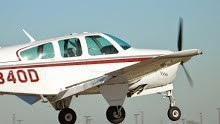
The runway was very narrow and a bit broken up, but as part of the deal with the condo developer on the East side, the airport received a new, wider runway in 2011.  There is a main road called AeroCountry Road leading into the airport, and small roads off it that double as taxiways.  You have to be careful driving at T31 - the traffic coming around the blind corner might be an airplane.  The small roads are all named after aviation legends, starting with Aeronica, Bucker, Champion and Decathlon, and going in alphabetical order to Yak Drive at the far North end.  Boeing, Airbus and Lockheed Martin don't get roads at T31, but small plane pilots know all these names.  I keep my own airplane on Bucker, named for a German light aircraft manufacturer pre-war.  Personally I think it should be renamed "Beechcraft", but that's only because I fly one.  Mooney gets a road, but Cessna and Piper don't.  Whoever chose these names went for aviation obscurity.

The airport is owned and run by the property owners on the field - own a hangar and you get a vote.  There are some non-aviation businesses that rent hangars, for old car restoration, storage and so on, and a cheer-leading school off the main entrance road.  Some cheerleader Moms have been known to get confused and drive onto the runway by mistake - this is aviation as it was before 9/11.  The pilots know each other and know who should be where, so interlopers are quickly seen and redirected.  Because the runway is small and bounded by trees on the East and Hangars on the west, the board doesn't allow touch and goes at AeroCountry, unless the aircraft is based on the field.  There is a flying school that teaches tailwheel flying and does aerobatic instruction, but that's it.  AeroCountry is an airport for experienced pilots who own their own aircraft.

It's unusual for a city of 140,000 to have two airports, even the City of Dallas itself only has two - Love Field and Redbird Executive.  Plano has one (Plano Airpark), as do Addison, Denton and Mesquite.  Carrollton, Frisco, Richardson and Garland have none.  Encroaching development is threatening both airports, which now have noise abatement procedures that pilots try and adhere to, when it is safe to do so.  AeroCountry has the bigger problem with houses now immediately to the East and South - not too long ago it was surrounded only by horses and cattle.  Pilots like to say that the airport was there first, but in a democracy the majority rules.  As baby boomers and WW2 veterans age, and the price of fuel continues to climb, the number of active pilots and airworthy aircraft is declining, but McKinney has two treasures that should both be nurtured and preserved, even though the face each presents to the world is quite different from the other.

All copyrights retained.

Friday, March 22, 2013

Where Is Everybody?

Modern astronomy is finding new planets at an astounding rate - several hundreds in the past decade.  It's becoming clear that solar systems are commonplace, at least in this galaxy.  Most stars that can have planets, do have planets.  Our ability to find these extra-solar planets is still limited, we can't identify small, rocky planets orbiting at the right distance to support our type of life.  But in our own solar system, 3 of the 8 planets (omitting dwarf planets like Pluto and Ceres) orbit in the habitable zone - Venus, Earth, and Mars.  That's roughly 1 in 4 of an admittedly small sample size.

Venus may have had life, but it has a runaway greenhouse atmosphere of carbon dioxide and nitric acid, with surface temperatures hot enough to melt lead.  Some have proposed to inject blue-green algae into the air, which would metabolize the CO2 into oxygen and water, dropping the temperature and making it rain for the first time.  After some period of time, Venus might become habitable for us.

Mars is too small to keep it's atmosphere, which has mostly all escaped into space.  All that remains is a thin, sparse covering of carbon dioxide, but water once ran freely on the surface, and may still be there, frozen at the poles and under the Martian soil.  Mars may have hosted life at one time, but not intelligent life - there are no canals, and no ruined cities.

Earth is the Goldilocks planet - neither too hot, not too cold.  Once it too was covered in a reducing atmosphere, but anaerobic life evolved, and turned the sky oxygen-blue, while comets deposited oceans of water.  Oxygen breathing life evolved, became multicellular and eventually what passes for intelligent (the US Congress not withstanding).  What is the likelihood this is unique?

Intelligence itself doesn't appear to be unique - chimps, dolphins and elephants seem to have at least some self-awareness, and creatures such as octopi, crows and apes can use tools and solve puzzles.  Our sample of one suggests that life eventually gives way to intelligent tool users.  So far it looks like planets are common, and life may be too.

So if the universe is full of planets teeming with intelligent tool users - where are they?  The Sun (Sol) is a very common type of G class yellow dwarf, a third generation star that has shone for 5 billion years.  The universe is about 13 billion years old - while it took some time to make the heavier elements we need, such as iron, silicon and carbon, there has been plenty on time for civilizations to arise before ours.  If star travel is possible, why have they not been here?  Why are they not here now?  We certainly will be out among the stars as soon as we get the technology down - that's our way.

The fundamental problem is that the Universe is too old, and too big.  Our galazy, the Milky Way, is one of hundreds of billions or even trillions of galaxies, and holds around 200 billion stars - that's 30 stars for every man, woman and child alive today.  In this galaxy alone.  Anything that can happen, has happened - somewhere.  If star-travelling species can exist, they do exist.  And if they do exist, why did they not colonize our solar system already?

There are a few possibilities, none of them very pleasant:

  1. Life, and especially tool using intelligent life is actually very rare.  Maybe we are unique - or civilizations are so spread out as to almost never make contact with each other.  What evidence we have so far is rather against this.
  2. Technology is a fatal disease - all civilizations that develop it die, from pollution, nuclear holocaust, or self made pathogens.  None make it as far as communication with other civilizations, or to star travel.
  3. Star travel isn't possible, and the planet-bound civilizations either don't communicate with each other, or they don't use radio.  Perhaps we are too young to have developed sub-space based communications which are instantaneous and efficient, and they are watching our TV signals and shaking their heads (or whatever they shake) over our youthful stupidity.  And poor production values.
  4. Everyone is hunkered down, or dead.  Advanced machine civilizations silently cruise the interstellar starways, and when they capture the radio signals from an ignorant and wasteful emerging biological infestation, they send out the clean up crew.
There is one other possibility - we are the first ones, a unique creation.  Perhaps created by God, perhaps by ourselves we are creating the universe as we go.  I wrote about this a few years ago http://dbcooper-theblog.blogspot.com/2009/05/changing-past.html.  Perhaps the universe is collapsing out of the probability  foam as we go about our daily lives, never noticing what we are doing to the quantum universe around us.

“You are gods; you are all children of The Highest!" - The Bible, Psalm 82 vs 6.

At least that one's hopeful......

Wednesday, March 20, 2013

Passing It Along - A Different "It"

Recently I've had some extra time on my hands, thanks to the general economy, and market conditions in my industry - network equipment for wireless mobile operators.  The North American giants of 10 years ago (Nortel, Motorola and Lucent) are all gone - swallowed by European companies like Ericsson and Alcatel, or replaced by Asian competitors like Samsung and Huawei.  My career has been focused on the delivery to market of products, but increasingly those products come from offshore.  So while I'm optimistic, it's taking a while to find a new job.

So I've been playing with Family Tree Maker, a piece of genealogy software that aggregates public records online, and allows you to use other people's research to build your family tree is no time.  And this is what I found.

My side come from a long time of farm workers in Yorkshire, and further back, Lincolnshire, England.  My Father's line for 5 or 6 generations is all local to that area, on the Yorkshire coast near Scarborough.  My Mother's line goes back through a great grandfather to the South of England, London and Sussex.  Both lines peter out eventually.

My Wife's side is much more interesting:

Line 1 - The Harts.  On December 27 1657, Edward Hart, along with 3 others signed a document sent to Peter Stuyvesant, the last Dutch Governor of New Netherland (now New York), protesting the lack of religious freedom.  For this, they were jailed until they repented.  Edward Hart was eventually released due to illness, and the document became known as the Flushing Remonstrance, the first declaration of religious freedom in the New World.  Edward Hart's descendants moved to New Jersey, where his great grandson, John Hart, became one of the New Jersey colony's representatives to the Continental Congress, and signed the Declaration of Independence on July 4th, 1776.

His daughter Deborah married Joseph Ott in 1786, their daughter Sarah married Matthias Servis, and eventually the Servis's married into the Conovers, a Dutch immigrant family (originally spelled Van Kouwenhoven). Sally's Mother's side are Conovers, plus Mennings, a line originally traced back to Transylvannia, in what is now Romania.

Line 2 - The Norsemen.  In 911, a Viking nobleman of Danish or Norwegian origin called Rollo Rognvaldsson (http://en.wikipedia.org/wiki/Rollo) besieged Paris, and on 20 July 911 he lost the Battle of Chartres to the Duke of Burgundy.  Rollo then pledged allegiance to the King of France, became a Christian and changed his name to Robert.  In return, King Charles made him Duke of Normandy, which Robert proceeded to pacify and unify under his control.  Until Robert, Normandy was only nominally under the French King's control, after years of Viking invasions, so the King gave him a title, and a task.

Robert I was the first of six powerful Dukes of Normandy, the sixth being William, who is known to history as William The Conqueror, the first Norman King of England.  Robert and his sons and daughters married into the noble families of France and the Holy Roman Empire, merging their Norse bloodline with the descendants of Charlemargne (Charles The Great) and Clovis I (the founder of the Merovingian Dynasty).

 The 5th Duke of Normandy, Robert II Curthose, sired a bastard son, Gilbert FitzRobert (in those days, a bastard was given their father's name, with the prefix "Fitz" in front. Thus "FitzRobert" means the child on Robert, and FitzRoy means "son of the King" (Roi)).  FitzRobert's chldren eventually come to England with their Uncle, William the Conqueror, and became Lords and Ladies of the English Norman court.  After a few hundred years, and after descent through the De Somery line of Welsh Norman Lords, and later the Huddingtons, one Joan Huddington married Sir Roger Wyntour.  Her 4th great grandson, John Winter, emigrated to the American colonies, dying in Charles MD in 1715.    The Winters married into the Emplfields, and later the Palmers (originally Balmer, from Germany), moving to Pennsylvania along the way.  Finally the Palmers married into an Irish line called the Wachobs, ending when a Wacob married my wife's Grandfather on her Father's side.  So from that side she has English, Viking and French royalty, plus descent from the greatest Holy Roman Emperor, Charlemagne.  I also found 3 saints, two more revolutionary war solidiers and a lot of "Fitz-somethings" along the way.

So while my side is pulling itself up from our British farm peasant roots, her side is a long descent from the top of the heap.

Sunday, March 17, 2013

Passing It Along

I flew almost every day this week. It's spring break in Texas, and my kids have been home.  My oldest daughter, Thing 1,  is a senior and for a class project she chose "learning to fly".  For many people, that would have been ambitious, but her case, since her dad is an instructor and aircraft owner, it was the "choice of least resistance".  Her boyfriend by way of comparison (a Nation Honor Society Finalist and holder of multiple offers from colleges for "free-rides"), is learning to play the school song on every instrument in the band, and mashing the recording together so that he is playing the whole thing - solo.

I felt that my Bonanza was a bit much for a beginner, so I borrowed a friend's Sundowner for the occasion.  Normally, if I'm teaching a student to get ready for a sport pilot or private pilot license, I'll spend more time in the air doing basic maneuvering, stalls, ground reference and gliding before moving to the airport pattern, but in this case her goal is to be able to fly a complete pattern including the landing in a short time.  I think this is a good thing - when I fly with my family I would like for there to be someone else on board who could get the thing on the ground, in at least a survivable crash-landing.  Thing 1 might fit the bill.

So we started with climbs and descents, level turns, moderately steep turns and simple stall recovery.  Next we moved to an airport and started doing pattern work.  After nearly 1 week, she can now do the full power take off, crosswind climb (with a bit erratic speed control, but within private limits), come back to downwind power (2,000 rpm) and turn onto a 1,000 foot AGL downwind holding 80 kts,  set up for landing (GUMPS, electric fuel pump on, lower flaps, set approach power at 1,700 rpm), do the base leg and turn onto final approach adding more flaps and controlling the descent with pitch and power.  I still have to get on the controls at about 100 feet to help with the flare and touchdown.

My friend's Sundowner is hangared in an awkward spot, and since I want Thing 1 eventually to be able to land my Bonanza, I switched her to the Bonanza on Thursday, but as it does everything 10 to 20 knots faster, and has more to remember - she was overwhelmed.  We're going back to the Sundowner.  But now the weather is changing, the winds are no longer light and aligned with the runway.  They are strong and gusty with a significant cross-wind component.  We'll take it up again next week after school.


Tuesday, February 26, 2013

Goal Oriented Flying

I don't like mnemonics, and there are many in flying.  Here are a few:

TOMATO FLAMES lists all the equipment required by law for VFR day flight:

Tachometer
Oil pressure
Manifold pressure
Altimeter
Temperature sensor (liquid-cooled)
Oil temperature (air cooled)
Fuel gauge
Landing gear position
Airspeed indicator
Magnetic compass
ELT
Seat belts

At night you have to add FLAPS:

Fuses (spares) or circuit breakers
Landing light (if for hire)
Anticollision lights
Position lights
Source of electricity

If you are flying IFR you must GRABCARD:

Generator
Radios
Attitude indicator
Ball
Clock
Adjustable altimeter
Rate of turn indicator
Directional gyro

And one that all instrument students are taught - the 5 T's:

Twist the heading bug or OBS dial to the new course
Turn to the new course
Tune the new frequency, or navaid
Time - Start your clock at the fix
Talk - make any required radio calls

Mnemonics just don't work for me (quite apart from the stupid silent "m" at the beginning of the word).  My mind isn't wired that way.  Instead, what I found does work is to use what I call Goal Oriented Flying (hey, that's "GOF"!!).  For each stage of a flight, I think about what is it that I want to achieve?  Is it to go as fast as reasonably possible in cruise?  Make sure all sources of drag are removed and that the engine is set as I want (usually 23" of power, 2300 RPM, cowl flaps in, trimmed correctly).  Is it to descend?  Reduce engine power, and add drag if needed.

When flying an instrument approach, what am I trying to?  I need to turn to the inbound leg, at a particular altitude, and I'd been asked to report the outer marker.  Or I know I need to time this leg, so start my clock.   Trying to remember the 5T's just doesn't work for me, especially when most of them are irrelevant at any given point.  At each step, before I reach the start of "something changing" as a waypoint or on a frequency, I think about what comes next and what needs to be done for success.  It's kind of how I approach my everyday life, not just flying.

I think I'm going to try it on one of my basic flying students too, as well as my instrument students.  What are you trying to achieve in a crosswind landing?  To land on the runway, with the upwind wheel first, with the nose pointing parallel to the center line.  Beyond that, does it really matter how you get there?

I do use one mnemonic on every flight - GUMPS before landing.  That's because I'm paranoid about having the gear down and checked.  I check it 3 times on each approach, and on an instrument approach I equate gear down with final descent - I won't fly the glide-slope unless the gear is down and checked.  Gear down - going down.G-D g-d?  Another acronym?

Sunday, February 24, 2013

Checklist happy

I made my own checklist in MS Word. It's 2 pages, each side formatted into 3 columns, and laminated back to back into a single, stiff 8 x 11 card that fits into the side pocket by my left leg. I started doing this when I still had my Sundowner, but that one was quite a bit shorter, and had room for things like crosswind control positions and ATC light signals.  My checklist for the Bonanza is quite a bit more dense.

I based it on the POH, but modified it from my initial experience and I had it pretty finalized after about the first 5 or 10 hours in my Bonanza. Once in a while I add or subtract something, but it's mostly stable now after 100 hours.

The front page is the external inspection, engine start (hot and cold), taxi and pre-take off checks - everything that happens with the wheels on the ground. If someone is flying who is unfamiliar with my a/c, I have them hold the check list in their free hand while doing the walk around, but I don't do it for myself, I know my plane and use a walk-around flow. I always use my written check list for engine starts and pre- T/O checks, although I know I know them by heart. It doesn't take any longer, and it takes emotion out of the equation and takes out any temptation to rush.

The reverse side is for in the air - it has the most common V-speeds, T/O and landing procedures for normal, short and soft fields, and in green type (so it doesn't wash out under red light at night), all the emergency procedures. I only really use that side as a memory aid for unusual actions, for normal landings I just use a verbal "GUMPS", but that most translates to "Am I on a tank I know has fuel and is feeding well", and "Are the wheels really down?" I don't usually go to full rich (the engine doesn't like it at low power) or high RPM (the neighbors don't like the noise). So I supposed it's really just G-U (and "do I want to do the M-P bit?") and check seatbelts.

Still I like to have it available, so the day when my gear motor stops, or the engine gets quiet, or I have to land on a soggy grass field, or I'm having a BFR and my CFI decides to wring me out (as I would do to him or her in turn), I'm prepared and ready.

Tuesday, December 18, 2012

The Night Before Christmas, with too many kids.......

'Twas the night before Christmas, and all through the gloom,
Not a creature was stirring - there just wasn't room;
The stockings were hanging in numbers so great,
We feared that the walls would collapse from the weight!

The children like cattle were packed off to bed,
We took a quick count - there were three-hundred head;
Not to mention the grown-ups - those hundreds of dozens
Of uncles and in laws and twice-removed cousins!

When outside the house there arose such a din!
I wanted to look, but the mob held me in;
With pushing and shoving and cursing out loud,
In forty-five minutes, I squeezed through the crowd!

Outside on the lawn, I could see a fresh snow
Had covered the people asleep down below;
And up in the sky, what should strangely appear
But an overweight sleigh pulled by countless reindeer!

They pulled and they tugged and they wheezed as they came,
And the red-suited driver called each one by name:
"Now, Dasher! Now, Dancer! Now, Prancer and Vixen!
On, Comet! On, Cupid! On Donner and Blitzen!"

"Now, Melvin! Now, Marvin! Now, Albert and Jasper!
On, Sidney! On, Seymour! On Harvey and Casper!
Now, Clifford! Now, Max!" - but he stopped, far from through;
Our welcoming house-top was coming in view!

Direct to our house-top the reindeer then sped
With a sleigh full of toys and St. Nick at the head;
And then like an earthquake, I heard at the roof
The clomping and pounding of each noisy hoof!

Before I could holler a warning of doom,
The whole aggregation fell into the room;
And under a mountain of plaster and brick
Mingled in-laws and reindeer and me and St. Nick.

He panted and sighed, like a man who was weary;
His shoulders were stooped and his outlook was dreary.
"I'm way behind schedule," he said with a sigh,
"And I've been on the road since the first of July!"

'Twas then that I noticed the great, monstrous sack
Which he barely could hold on his poor, creaking back.
"Confound it!" he moaned - "Though my bag's full of toys,
I'm engulfed by the birthrate of new girls and boys!"

Then, filling the stockings, he shook his sad face:
"This job is a killer! I can't take the pace!
This cluttered old world is beyond my control;
There even are millions up at the North Pole!"

"Now I'm late!" he exclaimed, "and I really must hurry -
By now I should be over Joplin, Missouri!"
But he managed to sigh as he drove out of sight:
"Happy Christmas to all, and to all a good night!"
(from Mad Magazine).