Friday, July 24, 2009

The Commercial Pilot

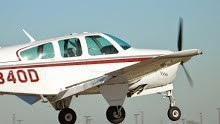
I have started training for the commercial pilot’s license, and ultimately flight instructor rating. To do this, a pilot must have passed a written test, meet a long list of experience requirements, and pass a practical check ride with an examiner. To pass the check ride, you must be able to fly all the maneuvers listed in the FAA practical test guide, while maintaining heading within 10 degrees and altitude within 100 ft.

Some of the maneuvers are essentially the same as the private pilot test – you must be able to take off and land under a variety of conditions, simulating short runways, soft surfaces and emergency conditions such as engine failure in the pattern. The difference is that were as in the private rating, an emergency power off landing just had to get down on the runway in one piece, a commercial pilot is expected to touch down within a couple of hundred feet of a designated spot. Everything is more precise.

In the air, the pilot must be able to perform very steep turns (my new instructor likes 55 degrees, just shy of a 2G 60 degree banked turn), a steep power off spiral (also at 55 to 60 degrees of bank), and two performance tasks – the chandelle and lazy eight. A chandelle is an emergency avoidance maneuver. While flying straight and level in cruise, the pilot banks the aircraft at about 30 degrees, and pulls the yoke back to start a climb, while advancing the throttle to full power. The purpose is to reverse direction and climb the most possible while covering very little ground. If that baseball player who crashed in NY had done a chandelle instead of a level turn, he wouldn’t have hit the skyscraper back in 2003 or 2004. A good chandelle ends facing the opposite direction, much higher, with the pre-stall warning buzzer sounding.

The lazy eight involves a start similar to the chandelle, only without adding power, and after turning through 90- degrees and slowing, you let the nose fall through and finish the other 90 degrees in a turning dive instead of a climb. The goal is to end up facing the opposite direction, at the same altitude, but having reduced your turn radius by making it at reduced airspeed. Link several together, and it makes a kind of “8-on-its-side” pattern.

The ground reference maneuvers are the same as the private test (circling a tree in a field, flying a square pattern while adjusting for wind, S turns along a road), but with one new one, “8’s around pylons”. You select any two landmarks (a big house with a pool, a road intersection) and fly around each making a figure 8 as seen from above.

I am not really having any problem with this. I have enough experience now, and I am familiar enough with my airplane that I can make it do all these exercise. Some took a few attempts, such as the chandelle, to find out how much to raise the nose to maximize the altitude gain before finishing the course reversal, but that was about polishing it. I can quite constantly do a 360 degree steep turn, and hit my own slipstream as I level out. The more difficult part is still to come. I have to change aircraft.

A commercial pilot has to have 10 hours at least in a complex aircraft. That means one with a retractable undercarriage, and a constant speed (more efficient) propeller system. So now I will have to learn how to do all those maneuvers again, only on a bigger, faster, and more complicated airplane.

Wednesday, June 24, 2009

I spent most of last week visiting a customer in the Caribbean island of Curacao. Scarlet BV offers a wireless broadband service in the Nederland Antilles islands, some of the most southerly islands in the Caribbean Sea.

Curacao is the biggest of the 4 islands that make up the Nederland Antilles, still owned and governed by Holland, although with a large degree of autonomy. The population of about 130,000 is made up of 50,000 Dutch, with the rest coming from all over. The island is very polyglot, with Dutch, English, Spanish and Papiamento (the local language, which is unique to Curacao) all of the commonly spoken and official languages. This Wikipedia entry has much more detail about the island, and some great pictures - http://en.wikipedia.org/wiki/Curacao.

In 2001, the only telecommunications service came from the government owned telco monopoly, with no broadband. Gaining access to an undersea fiber line, Scarlet launched a broadband wireless service to offer competitive voice and data access. Realizing that they needed a non-line-of sight offering to penetrate the hurricane proof thick walls of Curacao residences, Scarlet converted to a TD-SCDMA based technology from Navini Networks, since bought by Cisco. The first site was a 650 foot (200m) tall refinery chimney, now they have nearly island wide coverage.

In 2009, Scarlet converted their network to Mobile WiMAX (802.16e). Most of the network was upgraded by a software upgrade, including nearly all the subscriber units, the few older base stations that couldn’t make the upgrade were replaced, and re-deployed to start service on St. Maartin. The following is the link to their website, where you can see their service pricing and marketing - http://www.scarlet.an/en/.

Plans to expand onto Aruba and Bonaire are well underway. Recently Scarlet was purchased by an investor group headed by Belgacom, providing access to capital for additional expansion. Cisco is also an important business partner as well as radio technology and network services provider. Scarlet now has close to 5% market share by population on the island, possibly the highest market penetration of any WiMAX service provider in the world. In fact, they have more customers than there are households on the island, showing that Mobile WiMAX offers a “personal broadband” experience, similar to cellular voice service.

And the Hilton Curacao has great Mango Daiquiris!!

Wednesday, June 10, 2009

Instructor

Woohooo! Passed the 2 FAA Certified Flight Instructor written tests!

Tuesday, May 12, 2009

Changing the past

I had a revelation the other day. A full up, light came on, jaw dropped open revelation of how utterly astonishing the universe is. I tried to tell my wife about it, but she just shrugged and said "I knew that".

I was thinking about the Bell continuum. This is the strange place where all things happen simultaneously, because there is no time. The name comes about from the Bell Theory, which is itself an offshoot of the Pauli Exclusion Principle. Let me explain from the start.....

Way back in the history of quantum mechanics (about the time my Dad was born), a physicist named Wolfgang Pauli explained the fact that you could never see two electrons in the same orbit around an atomic nucleus by postulating what became known as the Pauli Exclusion Principle. It states that for electrons in a single atom, no two electrons can have the same four quantum numbers, that is, if n, l, and ml are the same, ms must be different such that the electrons have opposite spins.

The Pauli Exclusion Principle is what keeps subatomic particles distinct and separate from each other. If two particles did have the same quantum numbers, they would actually be the same particle. It has applications in electronics (semiconductors) and astrophysics. By insisting that particles must remain distinct one from another, it implies that things can only be compressed by certain amounts. The Principle is in fact what prevents my fingers from passing through the keyboard I am typing on, despite that fact that both are largely empty space.

It also says (in complex math that I won’t try to do here!) that if a particle spontaneously is created, that the sum of all its attributes combined with the other particles created from the same event is zero – all the quantum numbers add up to nothing, just as my high school teachers said I would.

John Bell extended this work and postulated the creation of 2 “entangled” particles, which he then separated and sent to mythical Alice, and mythical Bob. Alice and Bob didn’t measure anything about their particles, but one stayed home while the other flew to the other side of the world.

At exactly the same time, as they have agreed to previously, they measure one of the particle’s quantum properties, such as spin (s). The strange thing is that according to quantum mechanics (the Heisenberg Uncertainty Principle, which I have discussed earlier), the particle that Alice has is in an undetermined state until it is measured – it doesn’t actually have a spin, it has both spins until the observer measures it. That’s how a photon can go through two slots at once. When measured, it “selects” an output, and exhibits a given spin number.

Because of entanglement, the other particle instantly has the other, opposite spin. Bob’s particle will always have the opposite spin to Alice’, no matter how far apart the particles are. Somehow, they communicate faster than light and determine their outputs. This has actually been proven experimentally to be true, over and over. Einstein didn’t like it – he called it “spooky action at a distance” and declared that “God does not play dice with the universe”.

We now know that it is true, and the hypothetical medium through which the p[articles communicate is called the Bell Continuum, and it is the place in the “Star Trek: Next Generation” series that “Q” lived.

Here’s the part that blew my mind. Distance is one thing, but we see time as being something else, something fixed in the past and changeable in the future. However, let’s suppose I look up at the night sky. A human eye is quite capable of seeing a single quantum of light energy. The impact of the quanta on my retina in effect measures the quantum attributes (numbers) of the quantum, and transmits that information to my brain where the observer lurks.

That pins down the quantum of light energy. Any other quanta with which it is entangled have to “decide” their own states as a result. Now let’s suppose that these quanta all came from a quasar stellar explosion billion of years ago, and that some of the entangled quanta have already interacted with other matter elsewhere in the galaxy (which is very likely). By capturing and observing the quantum here on Earth in 2009, I am affecting (changing?) the past all the way back to the creation of the entangled particles.

When we look at things, we are not only creating them here in the here and now (by collapsing their uncertainty waves), but we are also creating the past, and our present is being changed by people in the future as I write this.

Mouth slackly hanging open ………

Friday, April 24, 2009

Yeehaaa!

Passed the FAA Commercial Pilot written test! Now for the fun part......

Monday, April 13, 2009

Totally Blind - but instrumented

Recently we had one of those rare weekend days in Dallas with low hanging cloud cover, but little vertical development (which is pilot talk for "not stormy"). The clouds just hung low over the runway at McKinney, occasionally spitting out a little rain. Perfect!

Since becoming an instrument pilot my view of weather perfection has changed. I used to like those clear blue days after a cold front had come and gone, when the air is crisp and you can see forever. I would get in a 'plane and climb as high as I could while fitting in a cross country (I was trying to build cross-country time in preparation for the instrument rating). The view was tremendous, and once I'd climbed past around 4,000 feet the air would become glassy calm.

Later I got my own aircraft, and the next year, an instrument rating. Now my idea of weather perfection is one where I can fly in actual cloud, shoot some approaches, but avoid too much turbulence, especially inside a cloud. When it rains in Texas, it tends to also storm, especially in the Springtime. Rain here tends to be an event of some violence, not something to mess around with in a lightplane.

So I launched into overcast skies, with 700 feet to the cloud base, on an IFR clearance direct KARLA, a GPS waypoint about 10 miles East of McKinney. Climbing to 2000 on a heading of 90 degrees, per ATC instructions, I swam up into clear air over a sea of white as far as the eye could see in every direction. These clouds where only 500 feet thick, and flat as a pancake.

Cleared to 3000ft, ATC gave me vectors to intercept the 212 radial from the Bonham VOR (BYP), and cleared me for the VOR-DME approach. I identified the radial using my #2 NAV and CDI, plus the DME, and also, just for grins, on my GPS. Fortunately they all agreed I was in the right place and heading in the right direction.

This pleased me. Turning in the clouds had given me what pilots call "the leans", which is vertigo. Pilots cannot trust their bodies senses in clouds, they must only trust the instruments. You turn right, and the body says you are climbing and turning left. When you can see on the panel that you are level and turning right, if you trust your sense of balance which says you climbing and turning left, you will move the controls in exactly the wrong way. That's one reason it takes so long to become instrument rated, and a reason why few private pilots complete it (almost all commercial pilots are instrument rated).

Once on the radial and 12 miles from BYP, I throttled back and descended into the murk at 2200 feet, then 7 minutes later at 22 miles on the DME down to 1400 feet, and clear of the clouds. I could see the airport dead ahead, and approach handed my over the tower. I told them I would end the approach and requested the ILS to runway 17. Cleared direct to the initial approach fix at FLUET, I recontacted DFW approach, and was cleared for the ILS. This time, I stayed at 2500 feet for the outbound leg and procedure turn, which meant I stayed mostly in the clouds, only occasionally popping out of the top at a particularly low area, or between cloud cells.

Once on the inbound leg, I intercepted the ILS glideslope, and setting up for 90 kts and 450 ft/min descent rate, came out of the soup at 1700 ft. The clouds were continuing to rise - now they were 1100 feet above the runway, making the field technically VFR. I canceled the approach and requested the GPS RNAV approach to runway 35 (the other end of the same single 7000 ft long runway at McKinney). ATC cleared me for the approach, and asked me to climb to 2500 feet, but them changed their mind and asked me to make the approach at 2000. I said "OK", because that would put me back inside the clouds, and because I could hear them working a Beechcraft King Air on the same approach. I suspected they want me to stay well below him.

At 2000 ft I kept occasionally catching sight of the ground, but by now I had got completely over my vertigo, and was flying entirely on instruments, which in the case of GPS on a real IFR flight simply meant following instructions until established on the purple line, and then descending along the GPS WAAS glideslope as indicated on the #1 CDI (just like an ILS). The main difference is that an ILS becomes more and more sensitive as you get closer to the transmitter, a GPS WAAS does not, making it very slightly easier to fly.

A GPS receiver uses satellites to fix its position in space, a constellation of 24 satellites controlled by the US military. For precision approaches, GPS uses a ground-based enhancement called "Wide Area Augmentation System", or "WAAS". WAAS approaches require an airport to have no ground facilities at all - so they are rapidly replacing NDB approaches at small airports, and even VOR/DME approaches will be a thing of the past soon.

It only took a few seconds to clear the clouds once on the WAAS glideslope - I could see the runway straight ahead about 5 miles away. I flew through a short, sharp rain shower, and landed. I didn't need the 3 approaches to legal currency, but the experience was useful, and knowing that I could do this for real was invaluable. It was also fun!

Wednesday, March 4, 2009

The Death of Print and Mea Culpa

I heard today that RCR (I have never known what that stood for!) closed it's doors. I knew many of the people there because over my years of working in the wireless industry, I have met and briefed most of them many times. And now, like newspaper dailies, they have fallen victim to the recession and the Internet.

The recession I have no responsibility for. I did not buy a house I couldn't afford, wallow in credit card debt, or package unsustainable loans for others. Fortunately my employer has a lot of cash in the bank, and has so far avoided layoffs (touch wood). So while my 401-k has suffered, it has not directly affected me (yet).

The Internet however has been a two edged sword. Before going into the wireless arena, I worked on the early days of the Internet, mostly involved with products to bring the Internet in enterprise networks. I turned down a job offer from my current employer in 1988 when they had about 100 employees - now tens of thousands.

After working on wireless cellular networks starting in 1995, I have always worked on the evolution of wireless data services, starting with 14.4 kbps on GPRS and CDMA, culminating in my last several roles with 100% focus on it with WiMAX and 4G. I have met with RCR many times to discuss the ramifications of instant access to all the world's information from wherever you happen to be, which is now reaching it's fulfillment with 3G, WiMAX and the iphone.

One result has been the death of print media, even that following the industry itself. Talk about ironic! I used to be sorry about my career's fallout when i was on vacation and was interrupted by email, voice mail or a call, but now I'm sorry because some of work friends are suffering more immediately.

Mea Cupla.