Thursday, February 6, 2014

Impass

What moves me?  Obviously flying and airplanes, things that have enthralled me for as long as I can remember.  My interest in aircraft goes back before my earliest memories:

Me at Heathrow airport with my Mom - and I'm looking at the airplanes
The picture above was taken at Heathrow (London) Airport in late 1958.  My Mom is smiling for the camera - I'm watching an airplane take off.  I look totally fascinated.

What are the other things that fascinate me?  What will I go miles out of my way to see?  Well, my wife Sally, for one.  After 20 years of marriage she still fascinates me.  I don't always understand her, or her me.  But I keep wanting to try and understand her, and know more about her.  The same for my two girls,Thing 1 and Thing 2, although it's different.  Sometime soon they'll fly the coop, and that will actually be a good thing - like fixing up an airplane ready for sale (although I'm not sure that's a great analogy).

I'm currently in Boulder CO on a business trip, and it struck me tonight - what is the other thing that fascinates me?  Food to a degree, but what makes me brave the extreme cold outside is BEER.  Not just any beer, but GOOD beer, well crafted, balanced beer that make you go "mmmmmmmmmmm".  I thought Boulder would have a plethora of great hand-crafted beers, but not so.  Most have been quite "blah" - generally they've been over hopped and over hyped.  But one tonight made me think about a blog devoted to beer, and that was the Irish Red at the Walnut Brewery.  I've never had an Irish Red before that made me want to do a jig before, but I have now.

Next post will have a link to my new blog - about beers I have known and loved.......

I think I'll call it "Beers 2 Go"....

Thursday, December 5, 2013

Conclusion - Part 8 (last) of "First to What?"

In the last 7 parts of "First to What?", I've told the story of the Wright Brothers, how they first developed the technology needed for controlled flight in a heavier-than-air aircraft, and then engineered and flew the first true airplane.  I think it's fair to debate whether that was the 1902 glider, the 1903 Flyer, or the 1905 Flyer III.

Before they ever built their first prototype, the Wright brothers determined that wing warping in a banked turn (like a bicycle rider or a bird) was the way to make a controlled turn in the air, and soon found after the failure of their 1901 glider that the Lilienthal lift tables were in error, due to the use of the wrong value for Smeatons constant.  This was at a time when others simply used Lilienthal's tables at face value, and tried to turn in the air like a boat on water in a flat, skidding turn.  The 1902 glider was the summation of these insights.

The 1903 Flyer added an engine, but the Wrights had to design and build their own, and solve the problem of an efficient propeller.  Their insight that a propeller isn't just an "airscrew" - it's actually a wing that moves through the air in a spiral, and the "thrust" is actually horizontal "lift".  This allowed the Wrights to fly using just 12 HP, and combined with the 1902 controls, the 1903 Flyer makes a strong case.

But the 1903 (and 1904) Flyer was supremely unstable and difficult to fly.  It wasn't until the 1905 Flyer III that the airplane was capable for sustained flight, and all subsequent Wright airplanes were derivatives of the 1905 design.

Were they first?  Some are claiming that other pioneers such as John Montgomery in Seattle and Gustave Whitehead in Bridgeport CT, yet there is no documentary evidence that they ever got off the ground, but even if they did they never solved the problems of control - which in turn makes in unlikely that they actually did what is claimed.  French pioneers like Santos-Dumont, Farman and Bleriot certainly did leave terra-firma, as is documented by contemporary reports and photographs, but they flew in uncontrollable craft in a more or less straight line and were lucky to survive.  However the French "aviators" left their mark in the many French words we use - "fuselage", "aileron", "aviation" and "aeroplane".

For years the Smithsonian Institute claimed that Samuel Langley was the first to develop an airplane (the 1903 "Aerodrome"), and in fact the Langley "Aerodrome" was later successfully flown by Glenn Curtis - but hushed up was the fact that Curtis made many changes to aircraft to make it controllable, and put in a better engine and propeller - based on the Wright's principles.  It was because of this dispute that the 1903 Flyer was dispatched to London's Science Museum until after WW2, it is on loan to the Smithsonian only as long as the Institute agrees to honor the Wright's achievement (which they do now very well).

Glenn Curtiss is probably came closest.  By 1908, working with telephone inventor Alexander Bell, he has independently invented the hinged aileron and could fly over 1 mile (in a straight line).  The next year he could also fly in circles and figure 8's.  He took more risks and won more prizes than the Wrights, and ultimately bought their company winning the commercial and legal battles once Wilbur died and Orville lost interest.

Strangely, the wealthiest and most influential country of that time, England, did almost nothing of note during this period - except for a certain Winston S. Churchill, who took flying lessons in the period before WW1.  His air-mindedness perhaps saved his country 20 years later, as he sounded the alarm over the Royal Air Force's unpreparedness to face the German Luftwaffe.  The result was the RAF's beefing-up just in time to save Britain and perhaps the rest of the world in 1940.

So what exactly were the Wright's first to do?  Not to fly, several had done so earlier than they.  What no-one else did before them was to fully understand all the elements that make up successful, sustained and controlled flight, and engineer them together to make the world's first, true airplane.  No aircraft built before the Wrights 1900-1908 development process did that, and afterwards no (successful) airplane built failed to use them.  The Wrights were the world's first successful aeronautical engineers.

Wednesday, November 27, 2013

Retreat and Irrelevance - Part 7 of "First to What?"

In 1909 the three Wrights stood triumphant - sought after by royalty, followed by the early paparazzi, everyone knew their names.  The Kings of Britain, and Spain paid homage in France, and the brothers traveled to Germany and Italy to demonstrate their Flyer to the Italian king and German Kaiser.  In February, Wilbur took his sister Katharine flying for the first time.

The Wrights in Paris, 1909

After transferring the two Model A's to their European partners and starting to train demonstration pilots, the Wrights sailed for home.  President Taft invited them to a reception at the White House, and Dayton gave them a two day homecoming celebration to remember.  No-one questioned their dominance in the world of aviation.  Except Glen Curtiss.

In 1908 Curtiss had independently invented a moveable wing control, the aileron, and in 1909 sold his first airplane using them.  The Wright's 1906 patent used wing warping for roll, and also covered the use of a vertical rudder to overcome the resulting adverse yaw and an independent elevator control for pitch.  Curtiss claimed that hinged ailerons were not covered by the wing warping patent and refused to pay royalties.  The Wrights sued.  They also sued any foreign pilots who flew at US airshows.  Resentment grew.

The Wrights founded the Wright Company in November 1909, and assigned their patent for the airplane to it in return for $100,000 and 1/3 ownership.  In 1910 they introduced a redesigned Model B, moving the canard elevators to the back and using more a powerful engine.  With sales slow, they created an airshow team that traveled the USA exhibiting the Model B at airshows.  In 1911, a modified Wright Model B (designated Model EX. and sponsored by drinks company "Vin Fiz") flew coast to coast (and is now on display at the National Air & Space Museum).

The Model B/EX ("Vin Fiz") on display at the Air & Space Museum

In February 1913 a US federal judge ruled that the Wrights patent covered all means of varying the angle of attack of a wing tip to generate a rolling motion, and that therefore Curtiss' ailerons were an infringement.  Curtiss appealed, but a year later the Court of Appeals seconded the lower court.  Curtiss still refused to pay, and used legal wrangling to avoid sending royalties.

In the meantime, Wilbur caught typhoid fever, and died in 1912.  Without his brother and closest friend, Orville began to withdraw into the Wright's new mansion with Katharine and their father Milton until his death in 1917.  Following that, Orville became even more withdrawn.  Wilbur had always been the one passionate about flying and aircraft, Orville didn't get interested until late in 1900, and didn't fly until 1902.  Without Wilbur's drive, Orville settled into a routine of tinkering with minor inventions for the control of heating his new home.

The Ill-fated Model C (scale model, as all were destroyed in crashes)

The US Army bought 6 Wright Model C aircraft - they all crashed along with several Curtiss designs - killing 11 pilots between 1912 and 1913.  An investigation found that the current designs were all too unstable, and recommended that future aircraft should have the engine ahead of the pilot, who was vulnerable to being crushed in a rear engine configuration.  Curtiss adopted the change readily, but Orville resisted.  In 1918 he made his last flight (in a Model C), and retired from running the Wright Company.

The US Army drastically reduced it's efforts the develop a military airplane after the carnage of 1912 and 1913.  However, European pioneers continued to advance, with Bleriot crossing the English channel in 1909, and further feats followed   In 1909, Glenn Curtiss won the Gordon Bennet air race (held in Paris) with an average speed on 46 mph, narrowly beating Bleriot.  The next years winner flew a Bleriot XI at an average of 61mph, in 1911 the winner topped 78 mph.  By the last race in 1913, the winning speed was 124 mph.  The Wrights were being left behind.

Then came The Great War (World War I).  Within 4 years European aircraft design progressed from flimsy kites held together with string and wax to well designed sleek fighters capable of almost 200 mph and carrying fixed machine guns, and heavy four engined bombers carrying over a ton of bombs.  When the US entered the war in 1917, it had to buy Niewport and SPAD aircraft from the French, so badly had it been eclipsed.

File:Fokker D VII SE-XVO OTT 2013 04.jpg
Best aircraft of WWI - Fokker D-VII - which far eclipsed US designs - only 5 year after the Vin Fiz

Following the Great War, and with Orville retired, the Wight Company was merged with the Martin Company but in 1929 it was divested and sold to Glenn Curtiss to form the Curtiss-Wright company, which focused largely on aircraft engines (including the engines used on the B-17 Flying Fortress).  The merger resolved all the remaining legal disputes. Later the name Wright was dropped, and the Curtiss company went to build World War 2 aircraft such as the P-40 Warhawk (and now builds subcomponents).  Meanwhile the Martin company after several mergers and acquisitions became part of Lockheed-Martin, keeping at least some the Wright's design legacy alive in modern aircraft such as the F-35.

Orville Wright in 1945
Orville lived to see his invention become an instrument to shrink the world, break the sound barrier, and to kill millions in the Second World War.  His sister Katharine married in 1926 at the age of 52, but died soon after from pneumonia.  In 1948, while fixing a doorbell at his mansion, Orville collapsed of a heart attack and died.  He was 72 years old, and a virtual hermit.

Tuesday, November 5, 2013

Paris Triumphant - - Part 6 of "First to What?"


The Wrights had competitors.  In the US, motorcycle racer Glenn Curtis, Smithsonian director Samuel Langley, telephone inventor Alexander Graham Bell, and gadabout and sometime compatriot Augustus Herring, who flew for Octave Chanute.  In France, Henri and brother Maurice Farman, motor vehicle inventor Louis Blériot, and Brazilian coffee heir Alberto Santos-Dumont were all making strides.  Flashy Santos-Dumont had built a series of successful airships and used to fly them to restaurants in Paris, leaving them tied up outside like horses.  There were also lesser known US competitors such as John Montgomery in Seattle and Gustave Whitehead in Bridgeport CT.  What they all had in common is that they worked on the problems of lift and power, and neglected control and stability.


Bleriot V airplane, 1907 (note lack of control surfaces)

The Wrights had taken a different approach.  Perhaps coming from their experience as bicycle builders, they had approached control and stability as the primary issues, and solved lift and power along the way.  After not flying during 1906 and 1907 and with their patent for wing-warping granted, the Wrights felt it was time to unveil their invention to the world.

The 2 year break in flying had done major damage to the Wright's reputation.  By early 1908, Blériot in France and Curtiss in the USA had both managed to get off the ground and were setting official records, with Curtiss flying over 5,000 ft  in a straight line to win a prize issued by Scientific America magazine in June Bug, an airplane designed by Bell.  Farman won 50,000 francs for a flight of  first 1, and then 2 kilometers in a circle in January 1908 (his airplane didn't use banked turns, a large vertical rudder turned the aircraft in a large skidding turn like a boat on water).  Never mind that 4 years earlier, the Wrights had already flown further, and in well controlled circles and figure eights too - they didn't enter the competitions.  The feeling arose in the US that the Wrights were "liars - not fliers", and in France that they were bluffeurs (fakes).
June Bug - designed by Alexander Graham Bell
In the Spring of 1908, Wilbur took a ship to France, where an updated version of the 1905 Flyer III was awaiting him.  The 1908 Flyer (Wright Model A) was larger still, with a 35 HP engine and two wicker seats replacing the old prone piloting position, with the controls modified to permit their use while sitting upright.  During their hiatus, the Wrights had built seven Model A Flyers, with one later to be modified in 1909 to US Army specification #486 and renamed the Military Flyer.

The aircraft had been severely damaged during shipment and customs inspections in France, and Wilbur began work to repair it, an effort which took 3 months and didn't enhance his reputation at all in the French press - he was still clearly not flying.

File:Orville Wright&flyer1909 .jpg
Wright Model A (this a/c still exists and on display in the Deutsches Museum in Munich

By August 8th, 1908 all was ready.  Crowds gathered at the Hunaudières horse racing track near Le Mans, among them Blériot and other French pioneers and writers.  Some expressed disdain at the Wrights use of a launch catapult, believing it was cheating, and others at the size of the Flyer, expecting that Wilbur would find it difficult to shift his weight fast enough to control the very large machine in the air.

The first flight lasted for only 1 minute 45 seconds, but was complete triumph.  Launched towards some trees, initially the crowds thought they were about to witness a disaster, but without discernible effort, sitting still in his chair, Wilbur guided the aircraft smoothly into a banked, controlled turn, and then another, and another and finally landed where he had taken off.  Rather than admit they were beaten, the French press declared the Wrights to be not Americans, but "Men of the World".  L'Aérophile editor Georges Besançon wrote that the flights "have completely dissipated all doubts. Not one of the former detractors of the Wrights dare question, today, the previous experiments of the men who were truly the first to fly".  French aviation promoter and Wright critic Ernest Archdeacon wrote, "For a long time, the Wright brothers have been accused in Europe of bluff... They are today hallowed in France, and I feel an intense pleasure...to make amends."

Meanwhile 4 weeks later in the USA, Orville duplicated his brother's feat flying another Model A at Fort Myers VA, making the first flight over 1 hour on September 9th.  8 days later, carrying Army Lieutenant Thomas Selfridge, a propeller failure in flight led to the first fatal airplane crash.  Selfridge was killed, and Orville badly hurt with multiple bone fractures.  Katharine came to Virginia to help nurse him back to health, and he continued flying and setting records.

File:1909 Flyer and Derrick.jpg
Flying Brothers - Orville flying the Model A at Ft Myers, Wilbur in Le Mans (with the maligned catapult)

In France, Wilbur's fame climbed as he continued flying, carrying passengers including the first woman, Edith Berg, the wife of the brothers' European business agent Hart O. Berg.  She tied her skirts together with rope to prevent them flying up in the slipstream, inadvertently creating the fashion of the moment, the "hobble skirt".


Edith Berg and Wilbur
http://upload.wikimedia.org/wikipedia/commons/thumb/c/c5/HobbleSkirtPostcard.jpg/200px-HobbleSkirtPostcard.jpg
The "Hobble Skirt"
In January 1909, Orville and Katharine joined Wilbur in France.  They were suddenly the most famous 3 people in the world, and everyone wanted to be seen with them -“Princes and millionaires are thick as fleas.” Wilbur wrote in letter home.  They stood triumphant and vindicated.


The brothers with King Edward VII of England.
Meeting King Edward VII of Great Britain, and King Alphonso VIII of Spain
Wilbur discussing the finer points of flying with King Alfonso XIII of Spain


Monday, October 14, 2013

Huffman Prairie - Part 5 of "First to What?"

Today we would call it "Stealth Mode" - it's what new start up businesses do while they hone their products and raise financing before announcing their existence and innovations to the world.

"Success four flights Thursday morning all against twenty-one mile wind started from level with engine power alone average speed through air thirty-one miles longest 57 seconds inform press home Christmas"
The 1903 Flyer after it's last flight

After the 4th flight ended with a hard landing that damaged the elevators spars on December 17th, 1903, a strong gust of wind overturned the airplane and sent it tumbling, breaking a wing spar, most of the wing ribs and several struts.  The 1903 Flyer never made another flight - its total lifetime in the air amounted to about 3 minutes.  After the breakthrough flight, the brothers packaged the Flyer up and shipped it back to Dayton, where it sat in a crate for 13 years.  In 1916, Orville repaired it and sent it to be exhibited at MIT and other places, before it was shipped to London to be exhibited at the Science Museum where it was on display until 1948 (apart from during World War 2, when it was stored underground).  Since then, it has been a centerpiece of the National Air And Space Museum.

The Wrights now returned permanently to Dayton Ohio.  Although they sent out a brief press announcement in early 1904 to establish their claim, they now retreated into silence to hone their invention. The brothers got permission to use a cow pasture 8 miles outside Dayton, where they assembled the Flyer II and made the first flight on May 23rd.   The 1904 Flyer II was almost a direct copy of the 1903 Flyer, with stronger landing skids and using iron bars to mount the forward elevators in order to move the center of gravity forward.  Progress was slow, the elevators remained over-sensitive in pitch and the brothers remained very cautious, flying low and slow.  They continued to experiment, adding a radiator and circulation system to cool the engine, and then a second radiator.  They changed the vertical rudder, extended the skids, lengthened the propellers and hundreds of minor tweaks and repairs.
The 1904 Flyer II compared with the 1903 Flyer - almost identical

It wasn't until September 15th that the Wrights exceeded 1 minute aloft, and on September 20th, they made their first complete circle of the pasture.  Although the machine remained severely unstable, the Wrights had the skills now to overcome it and make flights lasting several minutes.  From early September onwards, the Wrights used a catapult system to get to flying speed quickly, which greatly accelerated their progress.  Over the course of 1904, the brothers made 105 flights and built up 45 minutes of airtime, culminating in a 4 circle flight on November 9th which covered 3 miles and lasted 5 minutes.  The 1904 Flyer II was not seen by the brothers to be significant breakthrough, and they didn't preserve the machine.

The 1904 Flyer II in flight at Huffman Prarie, low and slow
The 1904 Flyer on November 9th 1904, on the 4 circle flight

On June 23rd 1905, Orville made the first flight of the redesigned 1905 Flyer III.  It was larger with an upgraded engine and bigger 1 gallon fuel tank, but retained the same basic layout and controls.  As a result, its stability remained a problem, and following a major crash in July that wrecked the aircraft (although Orville was unhurt), they decided on major changes.  They doubled the size of the elevator and moved it much further ahead of the wings, while increasing fuel capacity to 3 gallons.  They gave the wings positive dihedral, and disconnected the rudder from the wing warping controls, giving it a separate control handle.  With these changes the rebuilt machine flew on August 24th, and the Wrights found its control and stability to be much improved.  Soon the Wrights were routinely flying figure 8's and circles.  On October 5th, during one of their first public demonstration flights Wilbur flew 24 miles in nearly 40 minutes.  Four days later they wrote to the Secretary of Army, offering the world's first practical airplane.

The 1905 Flyer III as originally built, with short
elevator spars and anhideral wings

The 1905 Flyer III with longer spars and dihideral wings


On November 7th the Wrights disassembled the Flyer III and stored it until 1908, when they prepared for an Army demonstration flight by adding 2 seats and modifying the controls.  They sent it to Kitty Hawk for  testing,where it was wrecked in a crash.  Starting in 1914, the Flyer III was salvaged and restored, and in now on display at Carillon Park in Dayton Ohio.

The World's First Practical Aircraft, September 7th, 1905

Wednesday, October 2, 2013

"Success Assured" - Part 4 of "First to What?"

With the airplane now fairly well understood, the Wrights knew all that they had to do was to add an engine to their existing design.  By 1903, there were many different companies building internal combustion engines for cars, motorcycles and other uses, and the Wrights had always assumed they could purchase what they needed.  In December 1902, fresh from their successful flying in North Carolina, they contacted several of them asking for an engine that could deliver 8 or 9 HP and would weigh less than 180 lbs.  Ten firms responded, but none could deliver such an engine, or would do so for a reasonable price.

Now they turned to one of their employees for help, mechanic Charles Taylor, after deciding to build their own.  With Charles' help and mechanical expertise, they designed and built a small 4-cylinder engine weighing only 179 lbs.  To save weight, they greatly simplified the engine, which lacked sophisticated cooling, carburetor and spark plugs.  The engine was cooled by evaporation of water from a cooling jacket, and would overheat once that water was gone.  Fuel dripped into the inlet manifold from a small 1 qt fuel tank fed by gravity.  Ignition was mechanical driven by a battery (not on the airplane) for starting and a simple magneto to keep it running.  When cold the engine delivered 16 HP, but quickly dropped to 12 HP as it heated up.  It took them 6 weeks from concept to bench tests.

The Wright Brother's Engine, built by Charles Taylor
 The main technological advance that the Wrights were responsible for in 1903 was the propeller design.  Up till then, airplane propellers had been thought of as being like fans, with flat blades, or like screws, with curved blades.  The Wrights believed that propellers were a well understood technology, but as they researched naval design, they found little or no real empirical understanding of how this 100 year old design actually worked.  The two brothers began addressing the problem in their usual style, each arguing from a point of view until they had both convinced each other that the other person was right.  After several months, they hit on the answer that suddenly seemed obvious - a propeller was an airfoil, just like a wing - only one that rotated and moved through the air in a spiral and generated its lift horizontally.

The innovative propeller design and bicycle chain drive
 With that revelation, they could use their tables of airfoil designs and wind tunnel test to build a twisted airfoil shape for their propeller.  They mounted the engine and used bicycle chains connecting sprocket wheels of various sizes to gear the rotation down to the optimal speed for the propeller.  Each propeller was 8.5 feet in diameter, made of spruce, and twisted along its length so that the airfoil met the oncoming air at the best angle of attack.  The Wrights used gear ratio of 23 to 8, so that for every 23 revolutions of the engine, the propellers rotated 8 times.

Now the Wrights designed and engineered their 1903 airplane, knowing their engine power and weight, pilot weight, lift coefficient and target speed - they had all the components needed to calculate the lift, drag weight and trust needed to design their airplane.  They also submitted their first patent application for a "flying machine", which was awarded in 1906, and focused on the 3 axis control.  Using their experience of flying the 1902 glider they developed a padded hip cradle to control the wing warping and inter-connected vertical rudder, and a simple wooden lever that controlled the moveable elevator (still on the front, canard-style).  They mounted an anemometer to measure airspeed, a rev counter to monitor the engine speed, and on-off switches for fuel flow.  In September, the Wrights packed up their Flyer and headed for Kitty Hawk.

The 1903 Flyer's controls - hip cradle for the prone pilot, elevator lever and engine controls

Bad weather delayed their progress as they assembled their machine, a full 700 lbs in weight - twice as heavy as the 1902 glider, 21 ft long and with 40 ft wingspan.  It was massive.  Due to it's size and weight, the airplane couldn't be hand launched like previous designs, so the Wright built a simple 60 ft launching rail after calculating the needed take off run.  Although the brothers experienced issues with the sprocket wheels coming loose and a damaged propeller that had to be sent back to Dayton for repair, on December 14th they were ready.  They flipped a coin to see who would make the first flight (Wilbur won).  Giving full power to engine, the Flyer accelerated down the track, until after 40 ft it suddenly reared skyward, stalled at 15 ft and smashed into the sand damaging the left wing.

Undismayed, the brothers began to repair their aircraft, wrote home "There is now no question of final success",  and in a telegram "Success Assured.  Keep Quiet".  This one statement, "Success Assured", is I think the most telling - they had designed, tested and engineered the airplane - they KNEW it would work.  They were also totally unworried about competitors who were trying their own designs around this time, such as Samuel Langley and Augustus Herring.  They knew their aircraft would work, the others wouldn't.

On December 17th, with the airplane repaired and the weather cooperating, it was Orville's turn.  Forewarned by Wilbur about the overly-sensitive elevator, Orville started his take off run with Wilbur running alongside.
One of the most famous photos ever taken - Orville at the controls, Wilbur running on December 17th, 1903

Tuesday, September 17, 2013

Turning the Corner - Part 3 of "First to What?"

Although initially dispirited after the 1901 gliding season was ended, Wilbur soon recovered his natural optimism.  After only 2 weeks, his sister Katharine commented "We don't hear anything but flying machine and engine from morning till night....."  In September of the next year (1902), Wilbur made a presentation to the Western Society of Engineers, in which he recapped the Wright's experiments to date, and his comments were published in their transcripts, which were highly sought after by fellow experimenters.

Wilbur and Orville had become suspicious of Lilienthal's list tables, which they now thought may be in error, and also wondered if Smeaton's cofficient, used to calculate lift and drag for an airfoil, was also wrong.  At the time, Smeaton's coefficent (k) was thought to be 0.005, but it had also been experimentally measured as being anywhere between 0.0027 and 0.0054, albeit with poor instruments.  The US Weather Bureau had started to use k=0.004 instead.

The first test rig

To test their ideas the Wright's placed a small wheel horizontally on the front of one of their bicycles that balanced the drag from a plate of known size against the lift of an airfoil, but they found speed control difficult.  However, their early results seems to confirm their doubts in both Lilienthal and Smeaton.  So Orville, the most practical of the two brothers, made a small 18" long wind tunnel with a fan to generate airflow and vanes to ensure the flow was turbulence free.  They also created a very innovative way to measure lift and drag, again balancing the unknown force against known drag from flat plates also exposed to the same airflow.  In this way, they could make precise measurements of force, without having to measure force directly with springs and complicated mechanism.


The Wright's larger wind tunnel


In October 1902, Wilbur wrote to Octave Chanute, saying that "Lilienthal's table is very seriously in error".  Armed with this data, and using the results from their 1901 glider, the Wrights had calculated Smeaton's coefficient to be 0.0033, which is within a few percentage points of the value accepted today.  Using the new value for k and a new larger wind tunnel they built in October 1902, the Wright's tested a variety of airfoil shapes.  Although the wind tunnels are lost, the balance mechanism and drag plates are on display at the Smithsonian museum.  With the correct value for k in hand, Wilbur recalculated the proper coefficient of lift (CL) for their airfoil designs, and determined which wing shape was optimal for the speeds they flew.

Now the Wrights could design an airplane and know the critical functions of lift, drag, and glide angle (or power needed) in advance.  They had become the first true aeronautical engineers in the sense that their future designs were engineered for a specific level of performance, not just built in hope they would get off the ground if they were lucky.  They were also fully controllable designs with moveable airfoils, not just weight shifting.

Now the Wrights built a new glider, the 1902 glider - the first engineered aircraft.  They shipped it South to Kill Devil Hills in the September of that year, where Octave Chanute visited and brought, really against the Wright's desires, a few of his designs for "comparative testing".  The Wrights by this time were so far advanced that they already knew those designs were flawed and why they wouldn't fly, but not wishing to hurt the old man they accepted his gliders, but spent as little time as they could with them.

The 1902 glider was the largest aircraft built to that time.  The wings were longer and narrower (high aspect ratio), which they now knew reduced parasitic drag.  The airfoil had a camber of 22:1, and wing area of 305 feet.  It flew marvelously.  The Wrights started flying it a kite, and immediately noticed that it's lift was enough to make the wires almost vertical, rather than at the substantial angle of the 1901 glider.  The wing flew at a substantially lower angle of attack, and generated much less drag, with a glide ratio about 10:1.

The 1901 and 1902 gliders flying as kites (see the difference?)

Wilbur make the first flights, making glides of over 500 ft, and finally Orville took the controls of an airplane for the first time.  In the first 3 days they had flown further than their previous two trips combined.  One control problem remained, the strange "Well Digging" behavior when in a banked turn, named because the low wing would leave a crater in the sand as it dropped and pivoted.

Today we know this as "adverse yaw", a phenomenon caused by the increasing lift on the rising wing, which since drag is proportional to lift, also increases the induced drag for that wing.  As a result, the nose is pulled in the opposite direction to the turn, something we overcome with applying rudder in the direct of a "coordinated turn", one of the first things a student pilot learns (especially in a glider).  At the low speeds the Wrights flew, just above the stall, pulling the rising wing backwards would yaw the glider into a side slip, dropping the low wingtip into the ground.

Wilbur flying the first true airplane - with dual fixed vertical rudders (later replaced with a single moveable one)


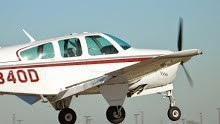
Orville invented the next innovation, a movable vertical stabilizer/rudder.  Wilbur, the more experienced pilot, recognized that with their limited controls of the time, a third control would be too much, and proposed tying the moveable rudder to the wing warping controls, inventing the coupled turn used on many modern aircraft, such as the Beechcraft Bonanza.  Around the same time, the Wrights re-rigged the glider to have drooping wingtips, inventing dihedral wings (although most wings use positive dihedral today, some still use negative dihedral or "anhedral", as did the Wrights).

With control over all three axis, the Wrights never again experienced well digging, and the airplane was substantially invented in 1902.  That year, the Wrights made nearly 1,000 flights, with the longest being 622 ft and lasting 22 seconds.  Enthusiastically, and in great contrast to the previous year, Orville wrote home "We now hold all records!"