Thursday, January 30, 2020

A strange and surprising year that was (2019)

2019 was a busy and surprising year.  In the last entry I told how I'd accidently become an airline pilot, which was my childhood dream.  At that time, I'd just failed the pilot training checkride, and was awaiting remedial training.

After almost a month, I got a new schedule using a facility based in Dallas rather than flying to St. Louis as before.  I did the training, passed the test and received a new Airline Transport Pilot license, with type ratings for the Embraer ERJ170/175 and 190 airliners.


Almost immediately, the very next Monday June 17th I was scheduled to start "flying the line".  My first trip was an overnight to Monterrey, Mexico - I flew the return flight.  After breakfast at DFW airport, we flew to Gray TX (Killeen) - an 18 minute flight.  Again I flew the return into DFW.  I'd made it!


Or so I thought.  I was in a period called Initial Operating Experience, where a new pilot flies with training captains, and that period ends with a Line Check before being released into the general pool, which usually means months of sitting in the airline terminal "on reserve", a backup waiting for a mainline pilot to miss his or her flight and fill in.  I mostly felt a lot of stress and very little enjoyment flying the line, and the poor pay was resulting financial issues at home.  We flew to the same places, staying in same "economy" hotels.  On the return leg of my linecheck, I was pilot monitoring (working the radios, checklists and programming the Flight Management System computer), there was bad weather at DFW and the approach controller changed the runway for us 3 times during the arrival.  On the very last one change up, I must have forgotten to "activate" the approach (and the Captain forgot to confirm), and so the aircraft tried to line up on the wrong runway.  We caught it and flew the correct approach by hand to the correct runway.  But that was enough for me to fail the line check.

After a couple of weeks waiting, I was called into the training managers office, and a discussion occurred that was not fun.  I said that since I was now a fully trained and qualified airline pilot, all I needed was little extra time to get the needed experience - after all, I was 60 years old and took a little longer to learn.  She said that with initial ATP checkride failure and then failing the line check, I would go in front of a "captains board" and they would probably recommend dismissal, which would go on my "PIRA" record and affect future hiring.  She said (and the union rep agreed) that I should resign.  Which I did, and it was a mistake.

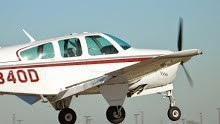
Now I was unemployed, and I didn't want to go back to corporate life.  So I did what any other rational unemployed pilot would do, and bought an airplane.  In August after Oshkosh, I rebought my old Sundowner back from the guy who'd bought it from me in 2011:

N6349C rejoins N340D
With N6349C back in the fold as a beginning and instrument trainer, I began flight training again, and within a month I had 3 other independent CFIs using my aircraft, and I realized there was business here.  So I bought a Redbird Flight Simulator and another airplane:

N1914L Beechcraft Sport (VFR only 2 seat trainer)


Redbird TD1 Basic Airplane Training Device (BATD) Instrument trainer


Now I had 2 fully owned airplanes and a flight simulator, and a 1/3rd shard in my old Bonanza.  Also had the right to use and training a Cessna 310 and a Piper Aztec for multi engine training, and a line up of people wanting training, without advertising or having a web page.

I also got a part time job at CAE as a right seat training partner in a Citation X full motion simulator.  I sat a 2 week type rating training course, which was exactly the same as a normal type rating course, except that CAE doesn't give me a checkride and the actual type rating until completing 80 training sessions in support of paying customers.  My type rating will be free, and they even pay me.

The final twist of 2019 was when I was called to ask if I was interested in flying right seat (first officer) in a privately owner real Citation X airplane.  Of course!  So I've now flown several real trips in the real jet (this is the actual airplane):

The Citation X - the fastest private jet you can buy.

So that was a strange and surprising year, that was!  I went from contract technical marketing in wireless telecoms to airline pilot trainee to flying the line, to unemployed, to super busy instructor and business owner and contract jet pilot.


Tuesday, April 30, 2019

The Accidental Airline Pilot

I accidentally became an airline pilot.

Last August, the Seattle-based wireless start up I was working for laid me off.  The project I was hired to work on ended, and the new role really required someone locally in Redmond.  I wasn't interested in moving, mostly due to the insane property prices up there.

On that day, I put in an application on airlineapps.com, just to see what would happen, not expecting anything.  Meanwhile, I started contracting for a wireless positioning company in Richardson TX, about 10 miles away.  When a locally-based airleine asked me to interview, at first I said "no".

Around Christmastime, the CEO told me he wasn't going to bring me on as a full time employee.  I was bummed, although frankly I wasn't very excited about the company or the job.  So I told the airline I would do the interview, not expecting much.  At the interview, I was surprised to be offered a job as a First Officer (FO) for one of the companies that operates as "American Eagle".  After soul searching and a long discussion with my wife over how we could live on 1/3rd of my salary, I accepted.

The regional paid for me to attend the 7 day CPT course at ATP, it was 4 days of classroom, mostly watching videos of landmark accidents and then a discussion of the causes. Colgan, Air France and a few others featured heavily. Then 3 sim sessions, 4 hrs in a CRJ/700 sim, 4 hrs in an MD80 sim, and 2 in an A320 sim. High altitude stalls, wake upsets, ILS Cat 2 and 3 and so on. Finally sat the ATP written and passed with 90%.

I started indoc at the airline in late February, 2 weeks of classroom reading from airline ops manuals, then a week on security, hazardous cargos etc. I got to put out a cabin fire, jump down the slide, and disable a would-be hijacker. Then almost a week off.

We started on systems in the morning for about 8 days, and procedures training in a "sim" each afternoon. I was teamed up with an upgrading captain, and the sim was a large screen running off a PC running Windows. We shared a mouse to "move the controls". For most of that time I was totally lost, it only started to come together right at the end.

After a weekend off, we started "Cockpit Procedures", which was slightly more sophisticated sim, in that it had multiple touch screens, laid out like a cockpit but still all driven off a PC. You could only touch one control at a time, and you couldn't actually turn a knob. We worked on profiles and call outs for 2 days, then I took systems and procedures validation tests. I passed the systems oral, failed the procedures practical.

I got one more day of training in the CPT trainer, and it seemed to all come together then and there. I retook the procedures test the next day, and passed fairly easily. One thing that helped was that I came in on my days off and stayed late to teach myself how to program the FMS (the airline did NOTHING to teach it to us, somehow we were supposed to learn it by osmosis).

Now Sim training is almost complete. I spent 2 weeks living in the Drury Inn next to STL airport, and going to 4 hr long sim sessions at FlightSafety.

The first 5 were very hard. It's not flying the airplane (which is not too difficult, apart from the speed with which things happen), it's managing the automation - specifically the guidance panel, which is like an autopilot on steroids with a bad attitude. On the 6th and final flight of the first week, I did much better and got signed off complete.

The second week started last Monday, and that went quite well. It was a simulated revenue flight BOS-JFK-BOS, I flew the 2nd leg and it went fine. It included a simulated rapid depressurization from FL390 to 10,000, which I performed, and an ILS CAT II into BOS. All Cat II approaches are flown by the FO.

After another session focused on emergency procedures, the 3rd session was maneuvers validation, part I of the ATP. I was unsat on the LOC approach (had helmet fire and couldn't remember the buttons to press on the GP until it was really late, resulting an an unstable approach), and didn't maintain V2+-10 on the V1 engine cut. Actually I didn't realize I had to be so precise - I thought it was an emergency and as long as I got a good climb going the rest didn't matter. No, you have to control the airspeed and heading to ATP standards while managing the emergency.

After telling me I'd busted the ride, the examiner started to teach me tricks the other instructors hadn't. Then with his guidance I did each maneuver to standard. If only I'd had him as my instructor!

The airline scheduled me for a remedial training sim session the very next day, but using my new tricks I just "flew through" it all with no issues. So now I'm signed off for a retake, but sitting at home waiting for a revised schedule.

My takeaways - once you're in the program, the airline wants you to succeed. However, you won't get any extra help until you start busting stage checks. I was saying I needed extra time right from the start - I just don't learn as fast as those 20 and 30 year olds, something that pains me to admit. But I didn't get it until I got incomplete on the checks.

However, if they don't think you CAN make it, they will punch eject quickly - or you will. Several have dropped out already, but I'm still here. I'm not quitting.

Thursday, December 27, 2018

Bye bye 2018

It's the end of another year.  Ooo, 2 posts in the same year - what can that mean?


This is me in August 2018, holding a freshly printed CFI Multi Engine Instructor (MEI) certificate, obtained in this very same Cessna 310R.  Oddly, the whole checkride went much better than the commercial checkride.  Perhaps it was just that I had more multiengine time and felt more confident.  Perhaps it was because I didn't have to do the dreaded single engine instrument approach.  Anyway, I knew as I approached for the final landing that I'd nailed it with nothing even close to exceeding the PTS parameters.

A friend and student of mine "K" came along for the ride, and on the way back I let him fly from the left seat and I gave him a free multi-engine lesson.  Now he wants to buy a Cessna 310.  Don't blame me, I was just the "connection".  It is a heck of a plane.

In other news, the Seattle-based company I was working for laid me off.  It wasn't a surprise, the aviation-related project I'd been working on was cancelled by the customer, and I wasn't prepared to move from Dallas to Seattle as was really needed to make work what they wanted me to do.  I almost instantly got contract work, although I think that's ending soon.

Around the same time, I flew the Bonanza up to Geneva NY to pick up Sally after she had driven from Dallas to NY with Thing 2.  I stopped for one night in Cincinnati to visits "D" who now lives there, but we didn't have time to fly his 172.  The next day I flew to Niagara Falls, and rented a car to drive up to Toronto to visit family.  While there, my uncle showed me a model he'd made of my Bonanza - and here it is, with the real thing at Niagara:


Meanwhile I've been doing a lot more instruction, with "M", a high school senior planing a career in aviation, "T", the owner of fence company who wants to buy a Cessna 182, and "D", an exp-pat Brit living in Dallas.  And "A2", another ex-pat Brit, and several others.

So I passed the ATP experience minimums in December 2018.  What next?

Thursday, May 31, 2018

A Year Later

An update from the path of life - subtitled "At Least I Blog Once A Year"

May is about to wilt and wither from the Texas heat and become June.  Time to update my few but loyal followers!!  ;)

First, what happened to the Cessna 150?  Who knows?  The insurance company took it, and the registration hasn't been renewed.  My guess is that it was parted out and is no more.

The Bonanza got better, and my wallet got thinner.  I had almost all the old radios taken out, and some are as I write, on eBay being sold so that they can grace another airplane.  I bought a used Garmin GNS 530W to supplement the existing 430W, and replaced the old Garmin transponder with a new GTX 345 to add ADS-B in and out and become 2020 compliant.  While I was in there I had the Garmin 496 moved from it's wobbly mount to a Gizmo panel mount, and coupled to the other GPS.  So now I have weather and traffic on 3 displays if I use my iPAD with Foreflight, which seems to be enough duplication.

I finally finished the Commercial multiengine add-on.  An MEI friend owns a Cessna 310R, and I started to train with him at no cost to me, because I'd helped him out a few years ago while he was getting his initial CFI license.  But life and maintenance intervened, and I went to a small flight school north of Ft Worth which has a Piper Aztec available at a reasonable price.  So in April I took and passed the test in the Aztec, in my opinion flying the worst I had ever flown.  I knew I could do everything, but on the actual test nothing went as well as it should have - nerves, I suppose.

But I passed.  Now I'm flying the 310R again and getting ready to do the MEI add on:


I stretched the legs of the Bonanza on my last trip to Upstate NY.  I flew my wife "Sally" and Thing 1 from Dallas to Walnut Ridge (KARG), a 2.3 hr flight, then another leg of similar length to Dayton Wright Brothers (KMGY) where we spent the night.  The next morning, another 2.5 hr leg took us to Penn Yann NY (KPEO) where I rented a car, and we drove to Thing 2's college in Geneva NY.

By early the next morning I had the Bonanza loaded up with all the "stuff" from her room, including a bicycle and fridge.  Sally and both Things together started off to drive the little red car back to Texas, and I flew the whole way in 2 legs of just under 4 hours each.  Good job my panel upgrade also included a Bluetooth link so I could play music over the headset, and make phone calls.

Weather was moving in over Indiana and Kentucky, so I diverted my IFR flight to Monroe County  (KTZV) in Southern Kentucky, a totally deserted field with cheap fuel and an clean but unmanned FBO.  After taking on nearly 60 gallons, I blasted off again to dodge light rain showers near Memphis (which showed up nicely on my ADS-B WX display), and landed in North Dallas around 4pm after another quick refueling stop in Sherman (KSWI).

Probably I was the only person in the Universe amused by the fact that I had to make use of the portable "Travel John" right as I was flying over Hot Springs at 11,000ft.

Thursday, May 4, 2017

The Big Update

Well, it's been almost 2 years since I last wrote in this blog.  So what's been happening?

In the Summer of 2015, "D" passed his private pilot test, and soon afterwards, so did "P".  And not long after that, in the late fall of 2015, I lost my job.

So for the next 4 to 5 months I flew most days, and also taught some ground school.  By Christmas of 2015, I went over 1,000 hrs total time.  In the spring, I had another 200 hours under my belt, when I found a consulting job, working for a start-up company in the Seattle area.

I also started working on adding multi-engine to my commercial license.  I began in a Beechcraft Baron, but the instructor (and owner) had a difficult schedule, and I switched to a different school with a Beechcraft Duchess.  I took my commercial ME checkride between Christmas 2016 and New Year 2017, and failed.  A couple of problems, one was clearly my fault, the other I think was my instructors fault.  But either way it was a failure (first ever), and now I'm about to get on the horse again and finish. Especially since I'm going to need a BFR - I prefer to get more ratings instead!

In March of 2017 I sold my Cessna 150 - to the insurance company.  A spring TX hail storm broke the canopy and dented the wings and horizontal tail, and the insurance company wrote it off.  Fortunately they are reselling it and I hope it will fly again.

D moved to Cincinnati OH, and tomorrow I'm flying his 172 from TX to OH, and with luck and fair weather, getting to visit the USAF museum in Dayton on Saturday.

Of course, a lot more than this has happened, Thing 1 finishes college in Arkansas next week, and Thing 2 just accepted an offer to attend college in upstate NY.  Our dog died and we got 2 cats.  Still have the Bonanza, thinking about adding ADS-B and a bigger display.  But that's for another time.

Thursday, July 23, 2015

The Long Haul - D becomes a Private Pilot

D came to me in March 2012, frustrated.  He owned a very nice Cessna 172N, and had around 60 hours in his log book, and wasn't satisfied.  "He won't teach me how to land!" he said, referring to his prior instructor, the same person who was my own instructor for my commercial test.

Looking through his logbook, I found he'd had 3 or 4 instructors over the past couple of years, several of whom had been my instructors.  D is a naturalized American citizen, born in Brazil, he speaks Portuguese, Spanish, Italian and English and works in international tech support for a telecoms company.  He is very intelligent, and very, very careful and methodical - in all 4 languages.

We started to fly together, I found he could do the basics - take off, set a course and hold altitude, do normal turns and slow flight.  After a while, we went to Mesquite airport (KHQZ) and started touch and goes, making 4 turns around the pattern.  At the end of June 2012 after about 25 more hours, D finally soloed.


https://video-dfw1-1.xx.fbcdn.net/hvideo-xap1/v/t42.1790-2/754938_4094311134594_1033193492_n.mp4?efg=eyJybHIiOjM4MSwicmxhIjo1MTJ9&rl=381&vabr=212&oh=826e072a628afb0032020c2ae03d559a&oe=55B16368


Next on the task list was to learn to handle flying in and out of AeroCountry (T31), where D kept his Cessna.  While Mesquite and McKinney (KTKI) each have long and wide runways suitable for jets, T31 has a 3,000 ft, more narrow runway with trees alongside the northern end, a road with a fence and telephone wires at the south end, and hangars running all along the West side.  The winds are difficult at best, and any cross wind results in unpredictable swirls from all sides, as the wind whistles over the trees or around the hangars.  In July, D soloed at T31 too.

AeroCountry Airport from the South, looking at Runway 35


You might think this was slow progress.  But D is very methodical, and can't be pushed.  He looks down to make sure the ground is secure before taking a step (metaphorically speaking).  He drives well within the speed limit at all times.  His pre-flight check takes half an hour, and involves flash lights and dental mirrors.  After each flight, he gets a rag and wipes down the wings, cowling and tail.  Arrggghhhh!  Not like me at all.  I need a checklist to make sure I check everything.  D needs a checklist to prevent him from fixating on step 2.

In August, we did a couple of dual cross countries.  Then, he vanished for a year.  In June 2013, we started flying together again, this time working on crosswinds, emergency procedures and I signed him off for 90 days of soloing.  In September 2013, we did a night dual cross country, and he did his solo cross countries, but mostly seemed content to fly the pattern.

In November, we started working towards his test, but while doing touch and goes at McKinney, his engine started to run rough.   I took over, and climbed above the field in case it was about to die.  We had about 80% of full power, and I decided to head back to T31 (8 miles West) at 3,500ft, keeping above the fields to the north of 380.  Once on the ground, we determined that the engine ran well on the left magneto, but sputtered badly on the right.

A few weeks later came the bad news.  The airplane, built in 1977, still had the original engine which was now over TBO and the shop was recommending an overhaul.  D didn't have the money to get a re-manufactured or new engine, and in his painstaking way, started to overhaul the engine himself, under the supervision of an IA.  This took FOREVER!!!

In August 2014, D called me to tell me that the engine was ready and installed, and he wanted me to help him test fly it and break it in with several hours of high power flying.  One of those flights was to Arkansas, to deliver my daughters left-behind computer when she left for college.  Finally in September, the engine was broken in and we could start to recover lost time.  I thought.

However, once endorsed to solo, D vanished again, reappearing every 90 days to get a fresh solo endorsement.  Until in May 2015, he discovered that his written test, which can be used as part of the requirements to take the private test, was about to expire at the end of June.    That meant his choice was either to take it again in July, or finally finish his training and take the test.  Quickly.  So we started flying together to get him ready to take the private pilot test.

We did a simulated test, with me acting as the examiner.  He was awful.  Many of the maneuvers he hadn't practiced since 2012 or 2013.  Other we hadn't done at all.  However, with a scheduled test looming D finally had incentive and drive to get it done, and on June 23rd 2015, D got his Private Pilot license at McKinney TX with 135 hrs in his logbook.  "I never thought I'd get this far", he told me.  "I just wanted to fly!"


Monday, April 13, 2015

First solo!

After using the Eastman method to increase the number of touchdowns per approach, P soloed on Saturday.....


And then came the traditional clipping of the tail feathers.....


Monday, April 6, 2015

The Eastman Method

Last week I read an article in CFI-to-CFI by Rod Machindo, about something called the Eastman method (by him).  Now Rod likes to write funny things, and much of what he write is not to be taken seriously.  But this was about a gentleman called - wait for it - Eastman, who built his own single seat airplane many years ago and taught himself how to fly it.

Yes, a single seater.  Illegal nowadays, but back then just following in the Wright brothers tradition.  So what Mr. Eastman did was to taxi slightly faster each time, until the airplane just started to fly, then he'd land it and taxi back.  That way he learned to land at the same time that he learned to fly, and by the time he gave it full power and took off around the pattern, he already knew how to land.

Student P has been ready to solo for the past 5 hours, but he's been unable to conquer landings.  At about 50 feet his careful co-ordination goes to pot, the nose starts to wander left to right, up and down, and he gets too slow and levels out too high and lands with a thump thump thump, and no matter what I say he doesn't get it.  So then we take off and 10 minutes later we've flown 8 miles around the pattern for 10 seconds of thump thump thump.

It wasn't working.

So last Saturday morning, P and I headed north to Grayson County airport, now known as North Texas Regional.  KGYI has a 9,000 ft runway, and a cooperative control tower.  I called the tower 10 miles out, and at 5 miles asked if we could do multiple touchdowns on each approach using the length of the runway.  "Sure!" they said.  "Cessna xyz cleared for the option runway 35 Right!"

Our first approach we did 4 touchdowns and used 8,000 feet.  They weren't good apart from the first one.  The rapid transitions were too much for poor P.   The next time around we got 3, which worked better, as I handled the take offs and handed controls back to P at about 30 or 40 feet.  The third time around we'd worked out the procedure.  He did all the landings, then I would take over, keeping the flaps down I would add power, climb to 30 feet and accelerate to normal landing speed.  Then I'd hand him the controls in a more normal configuration of speed, height and flaps.

By the end of 90 minutes, we'd done more than 20 touchdowns, and P was handing them like a pro.  Next step, SOLO!!

The keys for any CFI or student - allow about 3,000 for each touchdown, roll and take off (3 was comfortable on the 9,000 foot runway, using 7,000 ft and departing with 2,000 ft remaining; 4 was not).  The CFI should do the funny/weird stuff like taking off in landing configuration and only expect the student to do the actual landing.  Once airborne, the CFI should accelerate the aircraft to normal approach speed before handing over control - not doing that sets up the plane for a nose high, slow speed mush to the ground.  And find a place with a cooperative tower or a quiet uncontrolled field.

Thank you, Mr Eastman, and Mr. Machindo.  P thanks you too!

Saturday, March 21, 2015

Winter Blues

I suppose I can't really complain.  I don't live (now) in Boston, where they have record snowfall.  I don't live in the midwest, where it's so cold that engines have to be pre-heated, and some people with north facing hangars can't get their airplanes out because the doors are frozen shut.  I've never had to learn how to land on snow covered runway.

The "normal" North Texas winter weather is clear skies and temperatures in the 50s and 60s, followed by a "Blue Norther", an arctic cold front that sweeps down, and drops the temperatures to around freezing for a day or two.  The front may drop some rain, or it might be freezing rain or snow.  But after a day or two or three, it will all be gone, and we will have very clear, deep blue skies with a decreasing north wind.  Then the wind will shift back to the normal southerly flow, and it will warm up for about 7 to 10 days.  Then the cycle starts again.

So our winters often have the best flying weather of the year.  No severe storms (apart from ice storms), few strong thermals, and great visibility.  We even get the novelty of occasionally taking off facing North!

But not this year.

Several of my existing students have dropped off the face of the Earth.  I don't know if D is flying much - he's signed off to solo and close to being ready to take his test, has his own Cessna 172, and I don't expect to hear from him until his 90 day sign-off expires in April.  A is flying his Bonanza from Addison, I think mostly with buddies acting as safety pilot - or more likely with this weather not flying much at all.  R is elsewhere.

I started a new student in February "P".  P has picked up flying very rapidly, his dad flew in the air force and he grew up on USAF bases, he's always dreamed of learning to fly, and now in his 30's he's decided to do it (about the same age I was).  With less than 10 hours of instruction, he's already flying complete patterns without my intervention, and making OK (not yet good) landings.  We've done all the airwork (stalls, turns, instrument flight) and most of the ground reference stuff (square patterns around a field, circles around a point) except S-turns.  He's not good yet, but he's well ahead of where most students are with his hours.

The problem is the weather.  We're hitting about 50% of scheduled lessons, with the constant low clouds and intermittent rain.  We even flew a few times in MVFR weather - legal, but only just.  I generally prefer more margin, because I generally have it.  I'm not saying at all that we were unsafe, just that the normal winter weather here is so good that weather margins are usually a no-brainer.  I don't have to check ceilings and calculate cloud clearances in the pattern to see if they fit the definitions for VFR - when it's CAVU, there's no issue to be concerned about.

I can't wait for spring!


Wednesday, December 3, 2014

2014 - miles under the wings

Frequent blogger Gary just posted his year in review (http://gmflightlog.blogspot.com/2014/12/2014-in-review.html), which inspired me to do likewise:


Total time in 2014 (so far) - 88 hours.

Not so hot this year, although I might make 100 hrs by December 30th.  I had planned a trip to Las Vegas in September that fell thorough, the only other long cross countries were to and from Wisconsin, and to bring back the Cessna from North Carolina.  But my total time is now pushing 900 hrs, with over 200 of those as an instructor.  I've now given more instruction time than I've received (about 150 hrs)!  Since those 200 instruction hours were paid for my others, I suppose I could claim that my own flying instruction is now fully paid for - and that's something to smile about :)

Next year, I hope to top 1,000 total hrs!  That's my goal. 

January to March
Not much to talk about.  I flew my Bonanza 10 times, and shot three instrument approaches.

April to June
Formed a new Texas LLC (S&P Aviation), and seeded it with enough cash to buy a trainer, a Cessna 150 which I bought in Asheville NC.  I had a memorable flight to bring it back to Texas, flying IFR over the Smoky Mountains at 7,000 ft Westbound. The rest of the way was low and slow over the Tennessee and Arkansas flat-lands.  As part of the deal I gave an IPC to the seller.  No other instruction.

July to September
Took on a new student "J" who is planning to start his instrument training using my 150, and prior student "D" got his 172 back in the air after a major engine overhaul.  He and I did 10 hours of high power, mostly cross country flying to get his piston rings seated properly, and after some pattern work I signed him off to solo again.  "J" and I also flew the Bonanza to Oshkosh, a first for both of us.  I planned on flying the Bonanza to Las Vegas, but weather made me fly commercial instead.  The Bonanza also got it's annual in August.

October to December
Between J continuing to build hours, and new students "R" and "A", S&P aviation actually became profitable.  I did an IPC for "T" in his Bonanza, and once "A" got his G36 Bonanza airworthy we've started flying in that.  I used my Bonanza 3 times to fly my daughter to and from college in Arkansas.  Meanwhile, student R is flying my 150 and looking for a good 182.

Fly in the ointment: All through 2012, 2013 and most of 2014 I've been my own boss, working as an independent consultant able to schedule my own time. At the beginning of December 2014, I started working as an employee of a consulting company in Dallas (my wife is happy about the benefits), so my time is not my own.  I've made arrangements with an independent CFI to share the load and have her fly with my students when I can't due to work commitments.

What I have learned is that I can create a successful flying business, as long as my expectation is just that it will pay for itself and generate a little income on the side.  I've also learned that I can create a successful consulting business, something to consider down the road a bit.

Tuesday, November 11, 2014

Two More

"R" works in construction.  His family own a construction business and normally live a thousand miles East of Dallas, but happen to be here for 6 months on a contract.  His previous flying experience has been piloting his family's Cessna 337 SkyMaster with instruction from his Dad, but he just bought a Cessna 182 Skylane.

"A" is a retired tennis pro from an aviation family in West Texas.  He took the compressed private course from a local part 141 school at Addison airport (KADS), and takes his test today.  He just bought a G36 Bonanza, and wants me to transition him to high performance and complex aircraft, especially the Bonanza.  Then he will decide if I'll teach him instruments, or if he'll stay with the flight school to get it done faster.  Speed is more important than cost to him.

I've been flying with R in my 150.  He wants to get his private done while he's working in the DFW area, with little to do in the evenings and weekends.  As all of his experience has been in high performance aircraft, he's having to learn about precision use of the controls.  A SkyMaster will climb at a variety of pitch attitudes and speeds, but the 150 wants 77 mph plus or minus 10, or it won't climb at all.  The SkyMaster has very little "p factor" due to the twin engines rotating in opposite directions, and has the power and speed to line up with the runway without using the rudder much.  Not so with the 150, which is very light and needs good footwork on the rudders.

Other than that, R is almost ready to solo - once he gets his student license and medical.  His family seems to play a little looser than I like with the rules.  He didn't actually need them before going solo, but I've never heard of anyone that advanced in his training not having them already.  Once he solos in my 150, we'll move over to the 182 and use that for his cross countries and preparation for taking the test.

A is a very precise pilot pilot already.  We flew in my Bonanza last Saturday, and after some pattern work which he picked up very quickly (the speed and number of checklist items can be over-whelming at first), we did emergency procedures.  He was a bit shocked at how much more violent a high performance stall is compared to a trainer, and by how poorly a heavy, high performance airplane glides, but that's the reason for the training.  You can't assume one airplane flies like any other.  The good things about him are how quickly he learns, and that he is not afraid.

"D" has been my student for over a year.  In late 2013 he was almost ready to take his private license test when the engine in his Cessna 172 Skyhawk decided it needed an overhaul.  In the late summer of this year his airplane was ready to fly again, and after a few hours I signed him off to solo.  We've done 80 hours together and he's still not ready to take the test - he is a bit fearful and learns slowly.  He's more than twice as old than either R or A, and I think that slows him down a lot. 

Saturday, October 18, 2014

Breaking Through

October is a break through month.  The little Cessna 150 masquerading as a T-51, the slowest warbird on the field achieved a milestone this month, finally paying for itself thanks to new students.

J. is an 18 year old who graduated from high school last spring, and used a financial windfall to get his private pilot license over the summer.  He started at the local community college this fall, and plans to become a professional pilot.  I wish I'd had his drive and commitment at his age.

Following his PPL, J wants to start on instrument training, and use my little 150 to build time.  We did about 3.5 hours in the Cessna for transitioning into the new airplane (he learned using Piper Sport Cruisers, a Light Sport Aircraft or LSA).  The 150 is slightly too heavy to count as an LSA, but flies similarly with like speeds and performance.  I also used the 150 or my own purposes, and paid the LLC that owns it a dry rental rate.  The combined income well exceeded the costs for the month, and paid for the annual inspection and minor repairs it needed.

So it's moving to the big airport at McKinney (KTKI) next month, where although the tie down cost is more, the runways are better for students and the nice FBO more comforting and comfortable than the rat shacks at T31.  And two more students have said they'll start flying with me in November.  It looks like S&P Aviation and N61EA are lifting off!

Tuesday, August 5, 2014

Oshkosh - B'Gosh Part II

To follow up - this is what happened.

I flew from Dallas to Dubuque (KBDQ) with a fuel stop in Kansas City Downtown (KMKC) on Thursday 7/31, an easy 2.5 hrs plus 1.5 hrs, and stayed in a decent Holiday Inn downtown with a free shuttle ride to and from the airport.

On Friday morning, I took off from Dubuque at about 8am, and an hour later flew the RIPON/FISK VFR arrival at 2300 ft and 135 kts. The other choice was 1,800 ft and 90 kts.  I debated about which speed and altitude to use, but just ahead of me a cub on the low arrival reported he couldn't maintain 90 kts, and I decided to stay high.

Approaching FISK along the railroad tracks, the controller asked the "low wing 1/2 mile from Fisk please rock your wings", which I did, and he asked to make an immediate right turn East to follow the road. I was surprised not to be called a Bonanza with the distinctive V-tail, and I wasn't sure he was talking to me until I rocked the wings and he acknowledged.

I landed on 36R, really a taxiway, and as instructed kept my speed up to the end. With the big VAC sign printed from the online NOTAM PDF in the window, I got clear taxi guidance from the marshals, and ended up in row 68 (near the center of the field). I talked to others (including a couple from Ohio who won an award for their spotless 1958 (M35?) V-tail), and those who arrived mid week had problems getting parked, and ended up on the far south end. I was very close to the Machine Shop concessions, parked in a triangular shaped area filled with Staggerwings and Cessna taildraggers.

It took about an hour to get the tents set up and the airplane staked down (using flyties - an easy and secure product), and then I started wandering. I got back to my tie down in time for a late lunch, and watched the Friday airshow under intermittent rain and an occasional distant flash of lightening. The best parts - the V-22 Osprey and the USAF Thunderbirds.

Saturday had brilliant blue skies and hotter temps, but nothing compared to Texas. I bought a vented EAA hat with a round brim to protect against the sun, waited in line for an hour to get a ride around the grounds in a Bell 47D helicopter, and enjoyed another Thunderbirds show, this time the high show (with climbs up to 15,000 ft). The fireworks capped the day off nicely.

My plan was to stay until Monday morning, but work pressures and 50-60% likelihood of stormy weather on Monday made me decide to leave on Sunday morning. It took less than 30 minutes to get packed up ready to go, and at 10am I started the engine and joined a long line of taildraggers taxiing alongside 18R. After taking off on the left side of the wide runway, I overtook the gaggle easily, despite keeping the power down to 19" and the altitude less than 1300 ft until clear of the class D airspace.  Once clear I advanced the throttle to 100% and climbed to 8,500 ft.

My take-aways - Despite the intimating super long NOTAM, and all the war stories I hear, as long as you are on the ball Oshkosh isn't that hard to safely navigate. Thousands do each year (I kept telling myself). Study the NOTAM and make crib notes (I laminated the VFR arrival NOTAM on the backside of my "VAC" parking card for the window, and highlighted the frequencies and routes). Arrive if you can late morning - many people leave starting at 6am and by 10am departures are in full swing, and favorable parking spots will have opened up. Food choices are ample but monotonous - burgers, chicken tenders, hot dogs and fries, fries, fries. Vintage parking is close to the show, but N40 parking is closer to shops and has better bathroom and shower facilities. Taking off is easy, but once again read the NOTAM and know the routes.

You don't have to be some kind of aviation savant to safely fly into and out of Oshkosh, but you do need to be prepared and know and follow the procedures.

The flight back was interesting - bad weather over Kansas City led to a diversion to KVIH (Rolla National) in Missouri for a fuel and potty break, followed by skirting a developing line of storms on the climb out.  I was able to stay VFR (although I debated about asking for IFR), but climbed to 12,500 to stay above the developing cumulus.  After almost an hour up there I noticed a marginal deterioration in mental faculties, although not too much, despite the density altitude being almost 14,500ft.  The pulse-oxometer was showing 84%, and that seems to be about my limit, as well as being the FAA limit for extended flight..  


I'll be back at Oshkosh next year!

Tuesday, June 17, 2014

Oshkosh, B'gosh!

After 30 years of flying (albeit with long ground-bound periods at times), it's finally time, and I'm going to Oshkosh at the end of July.

For those who don't know, Oshkosh is the largest, busiest airshow in the world.  What makes it busy is that unlike most airshows this is one that you fly to.  The airport is littered with hundreds of private planes parked all over the place.  It started as a gathering for home builders (and still maintains some of that flavor), but grew into a celebration of all private flying.

https://www.eaa.org/en/airventure

And the sheer size or AirVenture, to give it it's proper name is daunting.  There is apparently (and I say apparently because I'm still learning this) only one visual method of arriving - you fly to a small town called Ripon in Wisconsin, follow the railroad track to Fiske, and from there follow directions radioed to you from the ground.

Because it's so busy you don't respond to the commands over the radio as is normal, and the controllers don't know your registration number call sign anyway, so they will address you as "Red Skyhawk"; "Blue RV"; or in my case "White V-tail Bonanza".  To acknowledge a command, you waggle the wings and comply.

You can arrive at one of two altitudes - a low arrival for those who can fly at 90 kts, and a higher arrival for those who fly at 130 kts.  I haven't decided yet which I'll do - my Bonanza will fly at 90 kts safely, but it's a bit uncomfortable and only 27 kts above my stall speed and at a pretty low altitude.  I think my choices are to fly the low approach with wheels down and 10 degrees of flaps to lower my stall speed, or to fly the high one at 130 kts.

Unless you book very, very early you won't get into a hotel.  So for this first visit I'm going to camp next to my airplane.  I have a 6 man tent, air mattress, sleeping bag and battery powered camping lamps.  And a solar powered charger for my cell phone.  I understand there is lots of food available, and a Kroger grocery store, so I plan to take some breakfast foods and nothing else.  And there are showers - so its not exactly roughing it........

Getting excited about it!  I plan to be there the 2nd weekend, arriving on Friday August 1st in the morning.  I plan to park in the Vintage area, which is open to all aircraft built before 1971.  Look me up if you are there!

Saturday, May 10, 2014

Two Kinds of Flying

Snug as a bug

The "new" Cessna 150L is safely home at AeroCountry airport, in West McKinney.  I flew on US Airways to Asheville NC about 3 weeks ago to inspect the airplane and make final payment.  Part of the deal was that I would include an IPC for the seller "Xavier", which I was glad about, because it gave me a couple for hours to fly in the aircraft from the right hand seat before agreeing to buying and hand over the rest of the money.

Echo Alpha is a 1973 Cessna 150 model L, with super-duper avionics - a Garmin 430 with WAAS and ILS, a King KX-155 with VOR receiver and localiser, and IFR certification (which also implies an Outside Air Temperature display).  The avionics are worth about 40% of the value of the purchase.  The twin radios are solid, the only potential issue I noticed was a generator whine under certain high load conditions.  The airplane was leased to a part 141 flight school, and maintained by them as a commercial aircraft.  They used it as a cheaper alternative IFR trainer to their standard 172s.

After concluding the purchase, I flew a few touch and goes at Asheville since it had been more than 10 years since my last time at the controls of a C150/152, but my recent C172 time with a student's airplane helped a lot.   By the 3rd landing I was doing my usual "greasers", so I dropped Xavier off at the FBO, and set out on the first leg of my trip home.  In the wrong direction.

My niece, her husband and small son live near Clemson University in South Carolina, a short 40 nm away.  So my first solo flight in Echo Alpha was a quick up and over the 4,000ft Smoky Mountains into Clemson, where I bedded EA down for the night.  My original plan was to traverse northern Georgia, Alabama and Mississippi, then across Arkansas and into Texas, but a storm moving up from the Gulf of Mexico changed that.  Instead a route to Chattanooga Tennessee, then south of Nashville, North of Memphis, and over Little Rock looked like a better bet - the problem was the first leg.

My original plan, since I'm scared of mountains, avoided any high ground.  The new plan involved flying over the Smokies again, with terrain up to 6,000 ft and overcast skies with rain later.  I filed IFR direct at 8,000 ft, with the intent to make a 180 degree turn and come back to Clemson if I didn't like what I saw over the peaks.  To keep my attitude right, I was actually expecting to make that retreat, with continuing on my contingency plan - rather like making an instrument approach where you plan to do the missed approach with a pleasant surprise if can actually touch down and land.  At 9am (right on schedule) the wheels lifted off runway 26, and with a wing waggle to say "goodbye" I set a course climbing (at 65 kts) as best a Cessna 150 with 100 HP can do (which isn't much).

There was 30 or 40 miles to go until I reached the highest terrain, and I needed most of it to get to 7,000 ft.  The dark and rather foreboding overcast appeared to be right around 8,000, so I asked for and got clearance to stay at 7,000.  Normally that's an Eastbound altitude, but ATC was being accommodating.  Over the highest part a little light cloud protruded down to 7,000 but I only spent about 15 minutes flying fully "blind" in IMC, and that in short 2 to 3 minute "chunks" as I flew through scattered stratus cloud.  I never felt in any doubt, and once the land started to fall away I knew I'd made it, and soon ATC asked me to either climb to 8,000 or descend to 6,000 for a Westbound altitude.  I chose to go lower.

As I descended, the headwind began to lessen, and eventually became a tailwind.  I was using my iPAD with Foreflight as a moving-map navigation aid, and at the lower attitude I could also get NEXRAD weather radar displayed through the cellular connection.  With the panel IFR GPS and a moving map display with weather, I was golden, with almost as much situational awareness as in my Bonanza.  After a quick fuel stop West of Chattanooga, I launched again, this time VFR at 3,000ft.

Navigation remained simple, and the miles slowly disappeared under the broad wing.  I can't say that I think visibility is better between the low wing and the high wing, but downwards visibility at low altitudes is certainly better in the high wing, while the ability to locate and track other aircraft is better with the low wing. They're just different with different strengths and weaknesses.

After another fuel stop north of Memphis, and I sent a text message to my daughter who goes to college in Conway Arkansas.  I told her to look up at a particular time, and I would fly overhead (thanks to the GPS I knew exactly when).  She asked me to land at the airport, and she would come out to see the new airplane, which is what happened.  So my planned last fuel stop at Hot Springs became a stop in Conway, and hug from Thing 1.  Then I did the last leg to Dallas.  At that point I noticed I was getting tired, and finding it harder to track a good straight line and stay within a 100ft of altitude.  Once clear of the Ozark "mountains" (tall hills really), I came down to 2,000 ft MSL and enjoyed the unaccustomed view from low and slow.

Go Fast, Young Man!

Which is what the title is about.  Having split my flying over the past month between the 300 HP, 170 kts complex Bonanza and the 100 HP, 90 kt simple 150, they are quite different creatures to fly.  The Bonanza is a high speed piston aircraft, for relatively high altitude (10,000 ft), comfortable IFR cross country flying.  It'll do local jaunts, but that's not what it's best at.  The 150 is great for flying around the pattern, and a few short cross countries at 3,000ft now and then, and is sufficiently well equipped for IFR flights (and training), but that's not what it's best at.  And there's the point.  Seen as tools, they are amazingly complimentary.

And now I have to fly more :)

Thursday, April 3, 2014

Going Corporate

So far, I've played at being a flight instructor.  I've got over 100 hours of instruction in my logbook, got one commercial pilot thorough his checkride and a private pilot almost past the finish line.  I've done some IPCs and BFRs, and given instrument instruction to a friend at a reduced rate.  I also taught Thing 1 how to do a complete airport pattern - everything except the actual solo.

But since my Bonanza is too fast and too complex to use as a trainer, I've had to take on only students who have their own aircraft, or advanced students who need time in a complex, high performance airplane (mine).  So my pool of potential students has been quite limited, especially beginners who probably don't have their own airplane.

Still, instructing has helped me fly more hours, and subsidized my fun flying.  But I think it's time to get serious.  So this year I decided to formally incorporate my flying business and I'm in the process of converting it to a Texas Limited Liability Company (LLC).  I'm also buying a basic trainer, a Cessna 150 equipped for IFR training as well (picture from controller.com).

Isn't she pretty?  Dressed as a USAF T-51
It makes economic sense.  As an instructor, I can charge the going rate in the Dallas area, about $40/hr.  If I fly in someone else's airplane, that's all I make, and I only teach on evenings and weekends about 40 to 50 hours a year - so my gross average income from my instructor business is around $2000/yr.

Assuming that gas costs around $40/hr (6 gall/hr) for the C150 and maintenance costs $20/hr ($2,000 spread over 100 hours), and that I rent the airplane to my students for the regional rate of $120/hr, about $60 of that is gross profit added to the instructor fees.  So instead of making $40/hr, I make $100/hr.

Also, perhaps I can triple my instructing hours if I can reach more students, lets say to 150 hr/yr.  So my $2000/yr goes to $15,000/yr.  And some of the costs that today I pay out of pocket become deductible, such as my hangar rent.  I also know several local CFIs who are in the same position, I think I can rent the airplane to them at a discounted rate of say $100/hr, so if it rents out for an additional 100 hrs/yr, that's an extra $4,000.
 
It's not enough to live on, but that's not my goal, at least not yet.  I'm just looking to supplement my income from wireless telecoms consulting, and get free flying. I'm also positioning myself to become a full time instructor in 10 years or so once I retire from my primary career.  I need to get the airplane back to TX from NC, get a certificate of operations from the FAA, and away we go..... (take off date - May 1st?)